A private key is the secret value used to sign blockchain transactions. Control of the key establishes practical control over associated cryptocurrency: if an exchange signs transactions with its own keys, the customer does not directly own those keys. section 5.3.1 section 5.5
Private-key custody creates distinct risks:
- Losing a key can mean losing control of the cryptocurrency, even though the transaction history remains on the public blockchain. section 5.3.1
- Holding assets on an exchange delegates transaction signing to that exchange and exposes the holder to custody, regulation, fraud, and platform risks. section 5.3.1
- Cold storage and hardware wallets provide ways to keep signing keys in a safer place. section 5.5
Figure 5.5 If you hold cryptocurrency on an exchange, the exchange owns the keys signing the transactions on the blockchain. Ledgers, such as cold wallets, provide ways to store the keys that signed the last transaction in a safe place. Be aware that cryptocurrency, a distributed transaction log, is a public blockchain and therefore never stored on your device or account.
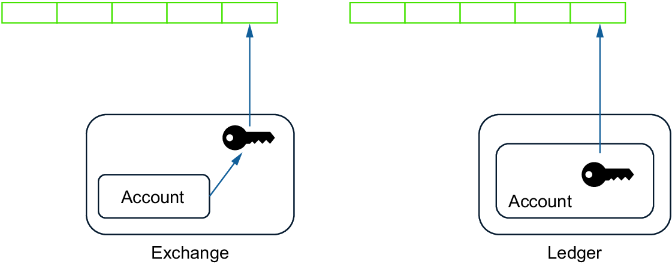
Use the figure to compare exchange custody with personally secured signing keys and to distinguish keys from the public blockchain record. section 5.3.1












