Model deployment moves a trained model from development into production, where it processes inputs and produces predictions for real-world business purposes. It turns model outputs into predictions, recommendations, optimizations, and automated workflows. section 11.11 section 11.12
Deployment belongs to an end-to-end process: define the business problem, assess data feasibility, clean and prepare data, perform exploratory data analysis, model and obtain approval, deploy, document, and maintain or refresh the model. section 11.0 section 11.1
Choose a deployment strategy according to data volume, latency, device constraints, and rollout risk:
- Batch deployment processes accumulated data offline in large groups, such as periodically clustering retail customers. section 11.13
- Real-time deployment generates low-latency predictions for incoming events, such as classifying simultaneous credit-card transactions. section 11.13
- Edge deployment runs a small, computationally efficient model on resource-limited devices when connectivity may be unavailable. section 11.13
- Canary deployment releases a model to a subset of users first, using early feedback before wider release. section 11.13
- A/B testing compares model versions while serving different user groups, supporting controlled evaluation and release decisions. section 11.19
Operational deployment requires accuracy and resource monitoring, scalability, security and compliance, reproducibility, drift detection, continuous integration and deployment, user feedback, versioning, and rollback. Maintenance continues after release because business conditions and data can change. section 11.14 section 11.19
Fraud detection
A credit-card system can deploy a real-time model that evaluates each incoming transaction with low latency. Monitoring, versioning, and rollback help manage performance and release risk. section 11.13 section 11.14
Figure 11.1 The complete machine learning modeling process
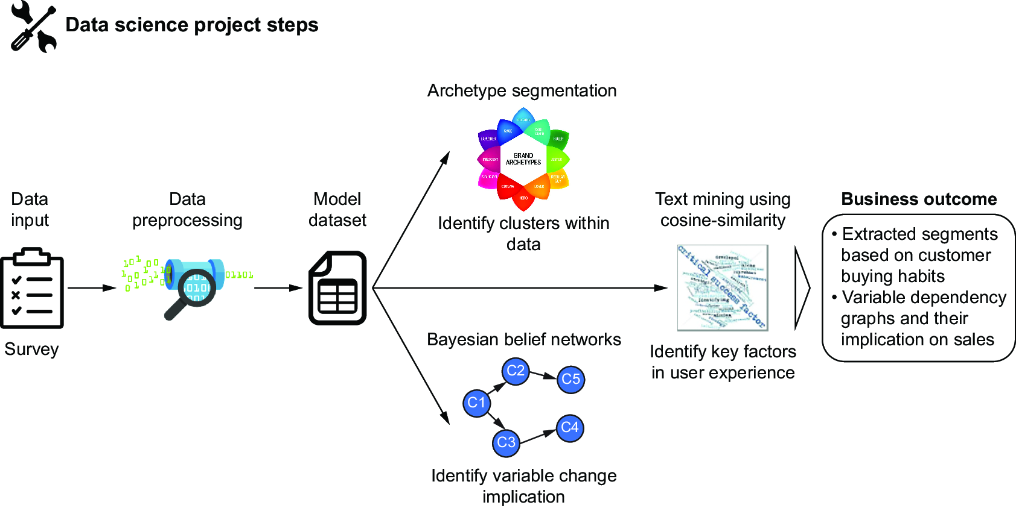
Use the complete modeling-process diagram to navigate deployment alongside business definition, data preparation, modeling, documentation, and maintenance. section 11.1