A recommender system infers a user’s interests or behavior and delivers content or items likely to match them, usually without requiring an explicit query for every result. It learns from preferences, interactions, viewed content, browsing history, and purchases. Unlike traditional search, which matches an entered query, recommendation typically uses already-known or inferred user knowledge. section 1.2.2 section 1.2.3
Recommendation and search are better treated as points on one personalization spectrum than as unrelated systems. Traditional recommendations use a profile without user adjustment; user-guided recommendations expose that profile; personalized search combines profile information with an explicit query. Both aim to understand information need and return relevant results. section 1.2.3 section 9.1
Choose a recommendation approach according to the available item data and user-interaction signals:
- Content-based recommenders match attributes of items or users. section 1.2.2 section 9.2
- Behavior-based recommenders match overlapping interactions from similar users and items. section 1.2.2
- Multimodal recommenders combine content attributes with behavior-based interactions. section 1.2.2
Related-item recommendations
An e-commerce site can display “based on your interest in this item, you may also like …” or recommend products from a user’s browsing and purchase history. Such recommendations help users discover personalized, relevant, or complementary content. section 1.2.2
Figure 1.4 Recommendations based upon users expressing interest in similar items
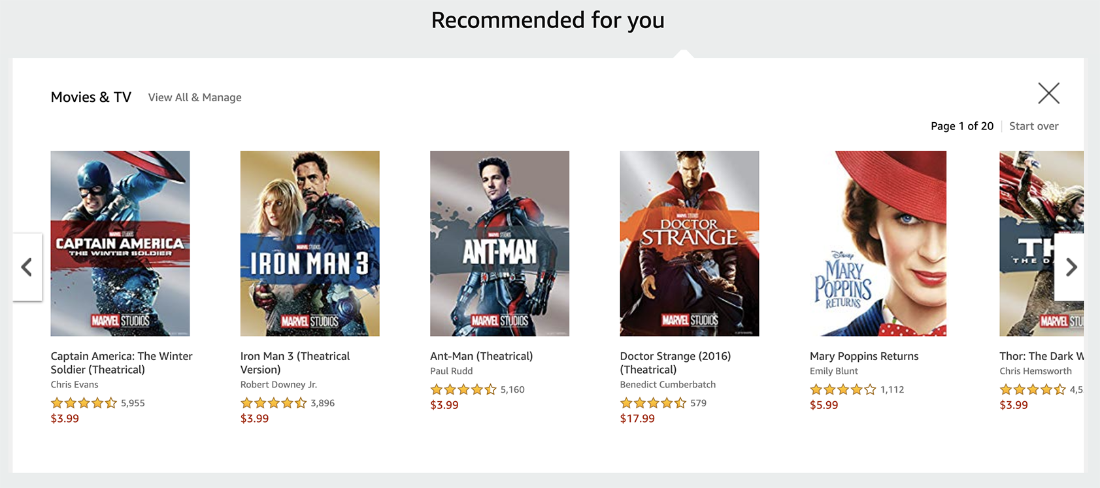
Use the related-item figure to visualize recommendations generated from users expressing interest in similar items. section 1.2.2







