liveBook · Manning

Recommender system

As explained in Graph Algorithms for Data Science

A recommendation system generates ranked or selected items for users based on user, item, or interaction information.

A recommender system generates channel suggestions from existing audience overlap and predicted future relationships between channels. section 10.1

Link prediction can extend recommendations beyond established relationships by identifying channels likely to share audiences in the future. section 10.1

A practical recommendation workflow can:

  • Use significant audience overlap to populate existing recommendations. section 10.1
  • Calculate several link prediction metrics rather than relying on one similarity score. section 10.1
  • Train and evaluate a classification model to forecast future channel relationships. section 10.1
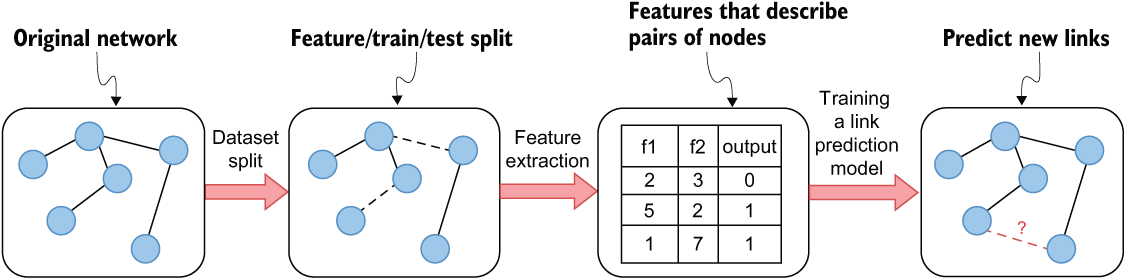
Figure 10.5 Building a link prediction model to recommend Twitch channels
10-05

Trace how a link prediction model turns Twitch channel relationships into recommendations. section 10.1


How Graph Algorithms for Data Science covers it

How deep it goes
Explains the workflow through link prediction metrics and classification-model training, without detailing model implementation.
Examples
Uses Twitch channel recommendations and relates the approach to movies, products, and medical concepts.
What it assumes
Assumes an existing shared-audience recommendation system and introduces future-overlap prediction as an extension.
What you can do after
Evaluate recommendation improvements by combining existing relationships with predicted future relationships.
How it connects
Connects recommendation systems with link prediction, audience overlap, similarity metrics, and classification models.

Also explained in

Compare how 8 books explain recommender system →

Related concepts

This explainer was generated by Manning's knowledge graph from the text of Graph Algorithms for Data Science. The section links point to the parts of the book it draws on.





