Risk management identifies potential losses, assesses their likelihood and severity, and reduces their impact. In investing, protection comes before aggressive growth: safeguards may limit upside, but they can prevent a single mistake from damaging the portfolio. section 1.4 section 7.1
Treat investment analysis like defensive engineering. Separate optimistic return research from skeptical risk research, then switch viewpoints yourself. Ask what could go wrong, which assumptions might fail, and what evidence would reduce uncertainty before committing capital. section 4.3 section 7.1.3
A practical risk-management workflow includes:
- Map threats by likelihood and severity, prioritizing risks whose consequences would be catastrophic even when they seem unlikely. section 7.1.3
- Diversify speculative exposure: stable investments can absorb losses in higher-risk positions, while staged investing limits the size and timing of new bets. section 7.4.4
- Use hedging when appropriate by taking an opposing position in a related asset, recognizing that insurance-like protection may reduce potential gains. section 1.4
- Review decisions with portfolio data, peer feedback, and cooling-off periods; these controls help expose FOMO and other emotional biases. section 7.3.1
- Watch catalysts such as earnings calls, regulatory changes, energy costs, technological disruption, and shifts in public sentiment. section 7.1.3 section 7.4.4
A concentrated speculative bet
Suppose a portfolio holds 80% index funds and 20% emerging-technology investments. A total loss in the speculative allocation would still be serious, but the stable portion preserves the financial foundation. Smaller staged purchases can maintain that ratio while income varies. section 7.4.4
Figure 7.3 How to map risk in a matrix based on severity and likelihood. We commonly create strategies to meet risks with higher harm severity first to mitigate the effect once the consequences become unavoidable.
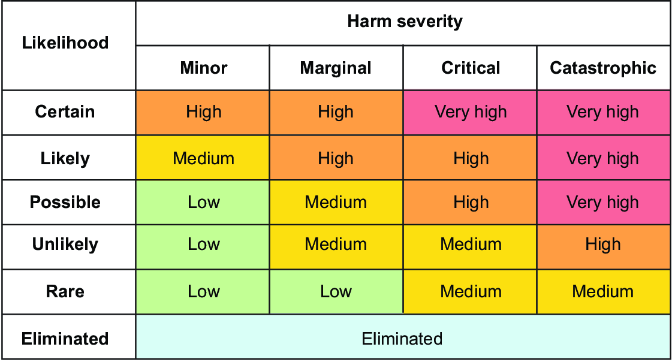
Use the risk matrix to classify threats by likelihood and severity, then define mitigation actions for the most harmful exposures. section 7.1.3




