When scenarios update the same service at the same time, one scenario’s changes can disrupt another’s results. Sequential processing runs scenarios one at a time for that service, avoiding this form of interference. section 18.1
Two scenarios, one pizza menu
If two scenarios modify the pizza menu in parallel, their changes can produce flaky results. Running those scenarios sequentially prevents them from interfering while they execute. section 18.1
Use sequential processing as an isolation trade-off:
- Disable parallel execution for scenarios that depend on the shared service, while allowing unrelated scenarios to run in parallel where possible. section 18.1
- Expect slower feedback when more scenarios must run sequentially. This strategy does not ensure repeatable results: persistent service state can still affect later scenarios. Resetting to a baseline or using exclusive data partitions can address that separate problem. section 18.1 section 18.7
Figure 18.1 Conflicting modifications when running tests in parallel using a shared database
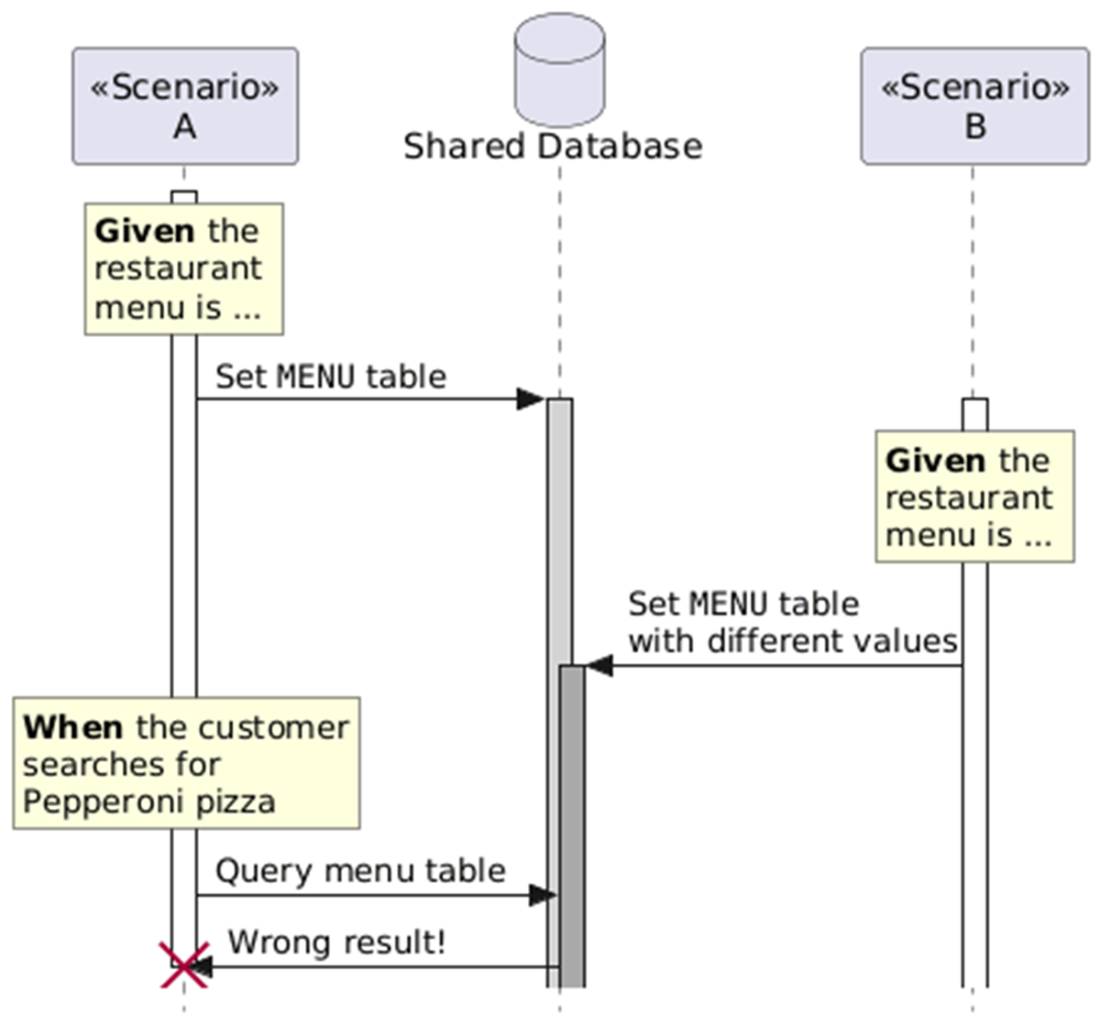
Shows how parallel scenarios can make conflicting changes to a shared database. section 18.1










