A digital certificate is an authenticated electronic document that links a public key to a verified identity. It works like a digital ID card: recipients can check that a key belongs to the person, device, or organization named. section 14.2.6
A certificate authority (CA) verifies identities and digitally signs certificates. That signature helps recipients detect forged or altered certificates, reducing the risk that an attacker substitutes a key to impersonate a trusted party. In public key infrastructure (PKI), certificates help establish trust for secure communication between parties that have not interacted before. section 14.2.6
Organizations can choose certificates for different operational needs, including:
- Short-lived certificates. section 14.2.6
- Wildcard certificates that cover multiple subdomains. section 14.2.6
- Certificates intended for particular devices, applications, or services. section 14.2.6
Figure 14.5 Illustration of Alice sending a message to Bob using a Public Key Infrastructure
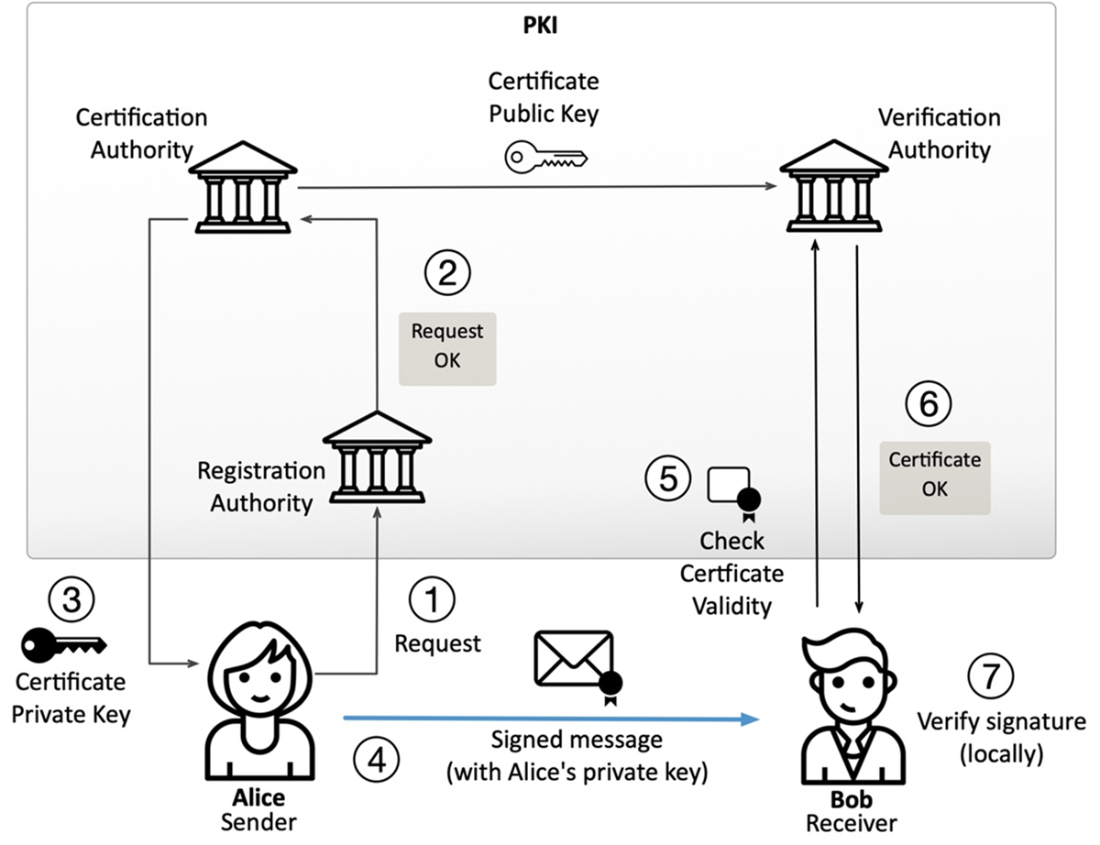
Follow an Alice-to-Bob message exchange to see PKI in use. section 14.2.6