liveBook · Manning

Certificate

As explained in Grokking Software Architecture

A cryptographic certificate binds an identity to a public key and is used to authenticate that identity in secure communication.

In standard TLS, the server proves its identity with a certificate. In mutual TLS (mTLS), the client presents one too, so both services verify each other before exchanging data. section 11.3.3

Two services check each other

When the Order Service contacts the Customer Service, both present certificates and verify each other’s identities. The Order Service then presents an application token, which the Customer Service checks for least-privilege access. section 11.3.3

Figure 11.5 In a Zero Trust world, you don't take anyone's word for it. mTLS is the "blind date" of architecture: neither party moves forward until both have verified each other's identity.
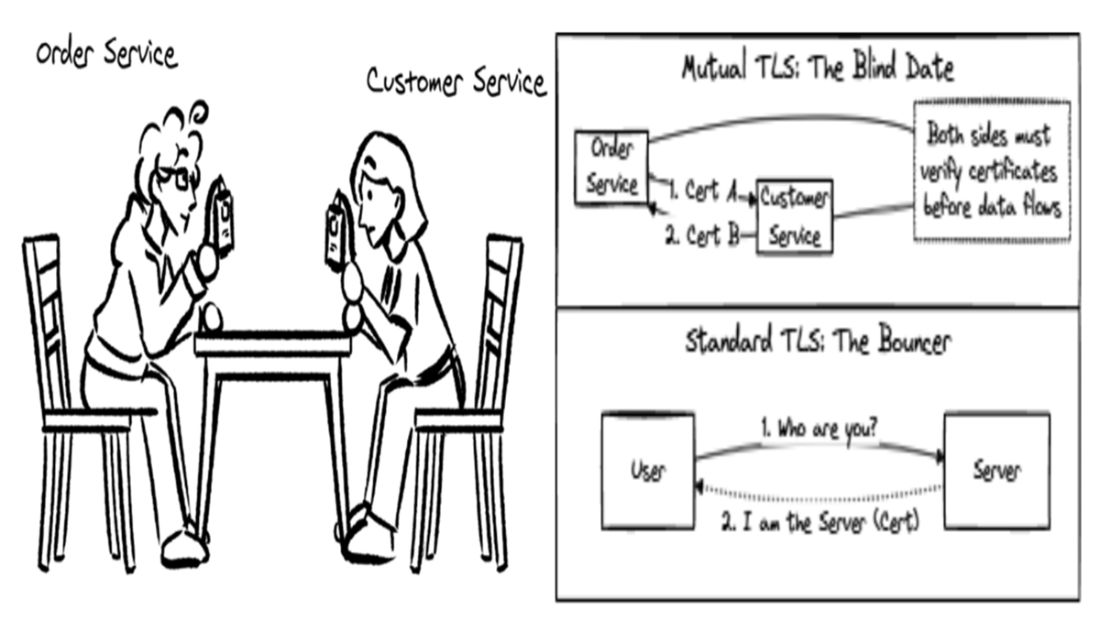
The blind-date analogy shows why mTLS requires both sides to verify identity before proceeding. section 11.3.3


How Grokking Software Architecture covers it

How deep it goes
Contrasts server-only TLS with mutual certificate checks, without detailing certificate issuance or validation internals.
Examples
Uses Order and Customer Services and a blind-date analogy to illustrate mutual identity checks.
What you can do after
Understand how mTLS uses certificates to verify service identities before a request proceeds.
How it connects
Connects certificates with TLS, mutual TLS, Zero Trust, application tokens, and least privilege.

Also explained in

Compare how 17 books explain certificate →

Related concepts

This explainer was generated by Manning's knowledge graph from the text of Grokking Software Architecture. The section links point to the parts of the book it draws on.