A stakeholder is a person who can approve, fund, influence, or otherwise shape an initiative. For a bug bash, stakeholders are often primary decision-makers in leadership roles, but influential and respected people outside a formal leadership role can matter too. Their support can turn an idea into an approved, well-attended event. section 2.4.1 section 2.4.3
Start by understanding the organizational landscape rather than assuming one approach fits every company. Company size, decision-making processes, testing culture, organizational politics, and prior release problems all affect who must be involved and what approval will require. section 2.0 section 2.3.2
Identify and work with stakeholders through a practical sequence:
- Review the organizational chart to find leaders, funders, C-level executives, department heads, and people responsible for relevant product areas. section 2.4.1
- Clarify where decisions are made, which delivery teams or products are in scope, and whether a cross-team meeting can reach the right representatives. section 2.3.2
- Learn each person’s motivations, experience, priorities, and view of quality before asking for approval. section 2.4.1 section 2.4.2
- Prepare a concise description of the initiative, its benefits, supporting arguments, and a draft timeline that connects to the stakeholder’s goals. section 2.4.2
- Seek support from highly interested and powerful people, while also meeting the needs of powerful people who may be less interested. section 2.4.3
Figure 2.3 How to interpret the stakeholder map for a bug bash: the list of activities you should consider for a different placement of stakeholders in the stakeholder map. The more influential and interested they are in the event, the more of their involvement you will need to consider throughout the planning and execution.
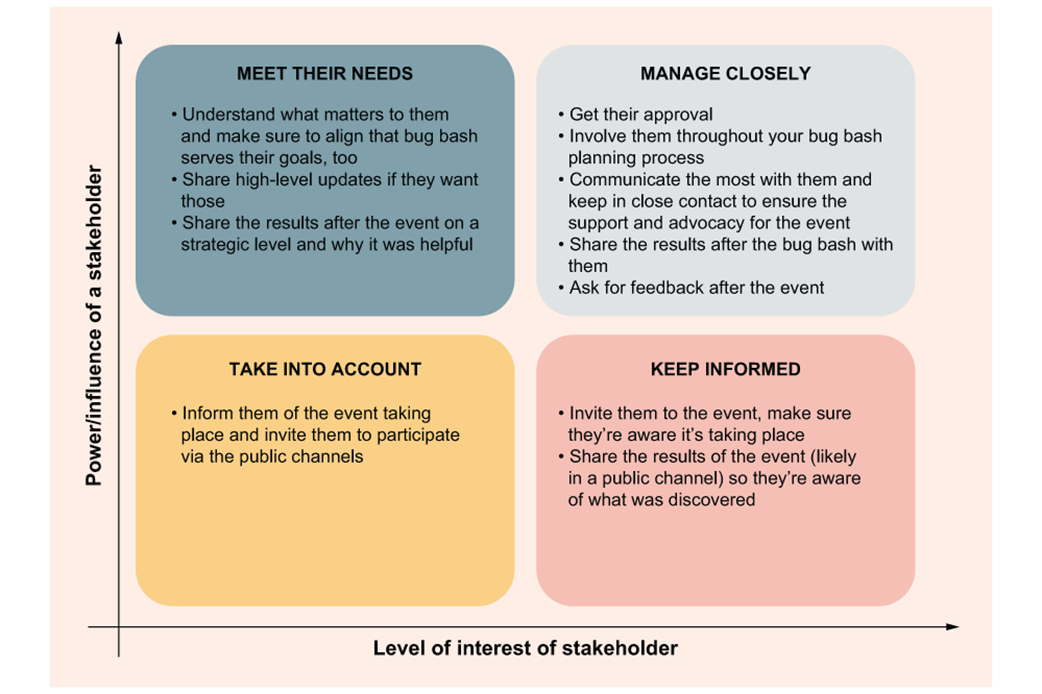
Use the stakeholder map to decide how much involvement each person needs: influence and interest determine whether to engage closely, meet needs, keep informed, or limit attention. section 2.4.1
Aligning a proposal with a CEO’s priorities
At Bash IT, organizers approach the CEO with prior support from engineering and finance, a draft timeline, and reasons for the event. They connect the bug bash to a painful release and emphasize customer reputation because that priority matters to the CEO. The CEO approves the idea, while still raising a practical concern about inviting the whole company. section 2.4.3
Stakeholder work is not merely obtaining a quick yes. It means building enough trust and shared purpose that people see how an initiative helps their own objectives. Short introductory conversations can reveal what quality means to them, what they are trying to achieve, and how collaboration can help both sides. section 2.4.2