A metric turns an otherwise hard-to-see process condition into a number a team can investigate. Useful metrics reveal where work waits or value stalls; a better number is not necessarily evidence of a better system. section 9.0
Use metrics as signals for learning, not rankings of individuals. For example, a cycle-time spike led a team to find that rotating on-call duties delayed code reviews. Creating review windows around those shifts addressed the process cause, and cycle time stabilized. section 9.1.1
A diagnostic metric can become harmful when treated as a target. Cutting integration tests to meet a build-time goal made builds faster but allowed regressions through. Ask whether improving the number also improves the system—and what behavior the target might encourage. section 9.1.2
Figure 9.2 Every metric follows one of two paths. The left path improves the system. The right path games the number.
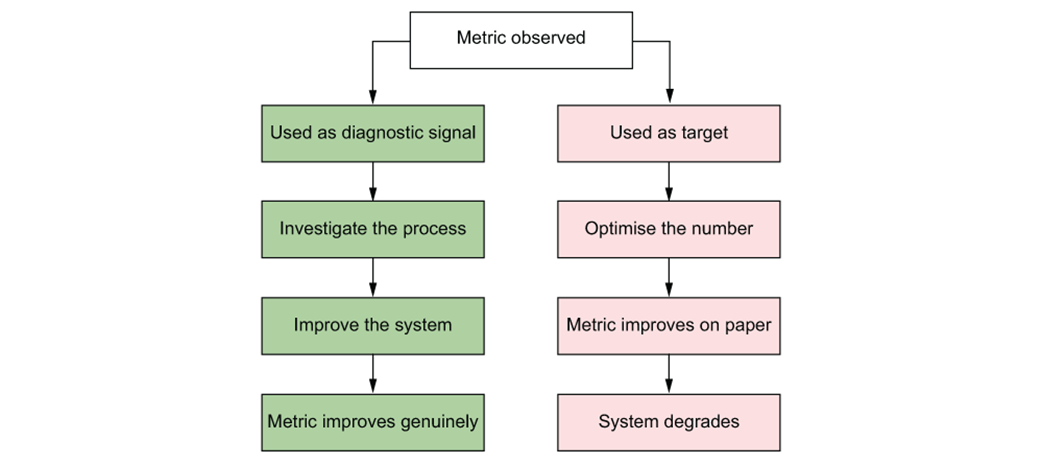
Compare the path from a metric to system improvement with the path that games the number. section 9.1.2