liveBook · Manning

Metric

As explained in Effective Conversational AI

A metric is a quantitative measure used to evaluate a system's performance or outcomes.

A metric is a quantitative measure of a conversational system’s performance or outcomes. Choose measures that reflect business goals and user satisfaction, not merely those that are easiest to collect. section 3.6

Metrics help reveal where an experience is falling short:

  • In an insurance claim flow, rising opt-outs and support escalations alongside falling self-service completions exposed a burdensome question. Moving the fax offer until after claim details were read addressed the problem. section 8.1.2
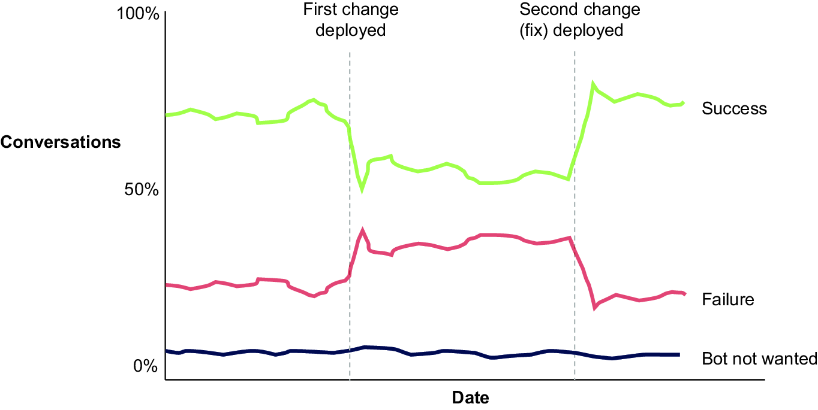
  • After deploying fixes, PharmaBot’s team compared failure outcomes with those from the previous two deployments to check whether the changes worked. section 3.5.2
Figure 3.20 Tracking conversation outcomes against the deployment of changes
figure

The dashboard tracks conversation outcomes alongside changes in deployment. section 3.5.2

How Effective Conversational AI covers it

How deep it goes
Connects metric selection to monitoring and improvement decisions through deployment comparisons and a business-impact example.
Examples
Uses deployment failure comparisons and an insurance claim flow measured by opt-outs, escalations, task completion, and user scores.
What you can do after
Evaluate whether fixes worked by comparing outcomes across deployments and use relevant measures to target improvements.
How it connects
Links metrics to business goals, user satisfaction, conversation outcomes, regression testing, and continuous improvement.

Also explained in

Compare how 16 books explain metric →

Related concepts

This explainer was generated by Manning's knowledge graph from the text of Effective Conversational AI. The section links point to the parts of the book it draws on.














