Symmetry groups elements that match through a transformation, helping viewers see relationships and patterns quickly. In visual communication, it includes reflection, rotation, and translation. section 2.2.4 section 2.0
Use the type that fits the structure of the information:
- Reflection mirrors one element against another, as in a butterfly chart comparing two groups. section 2.2.4
- Rotation arranges elements around a common axis, making radial charts suitable for cyclic data such as hours, months, or seasons. section 2.2.4
- Translation repeats an element at regular intervals, as in small multiples; it reveals relative differences but can hide individual detail. section 2.2.4
Symmetry in typography
Repeated type styles create a visual hierarchy: labels with the same font, size, and placement signal equal importance. Apply consistency deliberately; when everything is emphasized, nothing stands out. section 5.4.5
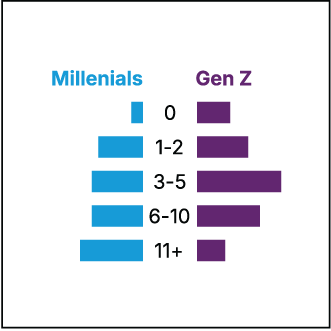
Compare the reflected layout used to relate two categories. section 2.2.4
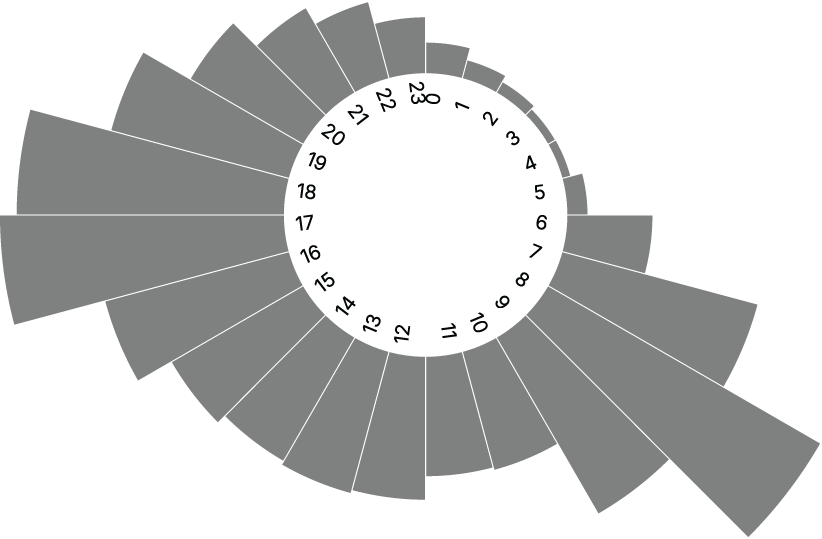
Inspect how repeated rotation supports a radial chart for cyclic values. section 2.2.4
Figure 2.12 Principle of symmetry: translation. (Ivett Kovacs. Used with permission. See the interactive version at http://mng.bz/G9rV.)
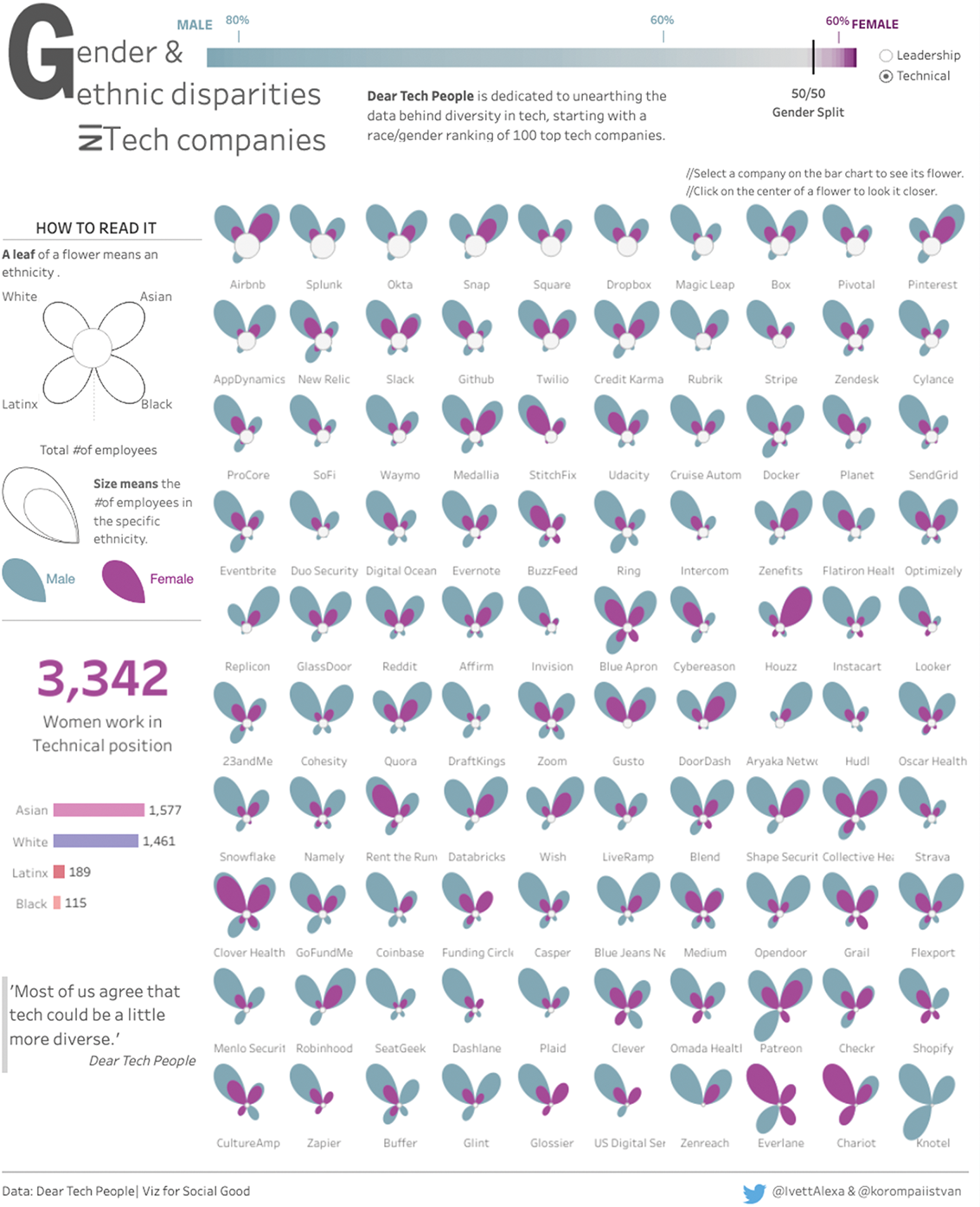
See translation repeated across a field of comparable charts. section 2.2.4



