A database table stores one type of record in named columns and rows. In a relational database, tables have a fixed schema: each table has a defined structure rather than a flexible collection of fields. A board-game API might use separate Users, Roles, BoardGames, and Comments tables. section 4.1.1
Separate tables still need a way to connect related records. A primary key uniquely identifies a record; another table can store that identifier as a reference. For example, a BoardGameID column in Comments can associate each comment with a particular board game. These references help form a structured database schema. section 4.1.1
This differs from a document-oriented NoSQL approach, where a board-game document might include its comments. A relational design keeps those record types in separate tables and connects them through identifiers. section 4.1.1
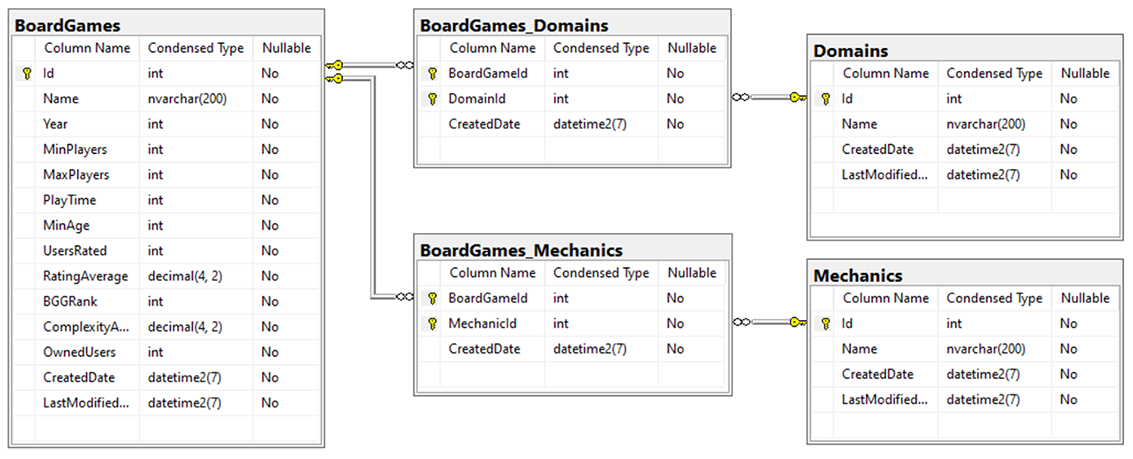
Use the table-oriented board-game schema diagram to see how the record types are arranged as tables. section 4.1.1
A table is only part of a database schema, which also includes relationships, views, indexes, and constraints. An EF Core data model is different: it consists of C# classes used to interact with the database structure. Creating the MyBGList database in SQL Server Management Studio makes a Tables folder available; it does not, by itself, define the project’s tables. section 4.0 section 4.2.4











