Transport Layer Security (TLS) creates an encrypted web channel between a browser and server. For example, during an anonymous virtual-health consultation, TLS protects the conversation’s content from an eavesdropper, while some routing metadata remains visible. section 2.7.1
TLS also authenticates the server, preserving confidence that a website is the legitimate party in the relationship. Certificates issued by trusted Certificate Authorities link a domain name to the public key used to authenticate the session. section 3.2
TLS provides important protections, but the browser lock is not an absolute guarantee:
- Encrypts communication content while leaving IP addresses and the visited domain visible for routing. section 2.7.1
- Lets browsers verify a server certificate and establish a confidential communications channel. section 3.2
- Can be weakened by misconfigured certificates, expired Certificate Authorities, man-in-the-middle attacks, or user confusion about deceptive domains. section 3.2
A misleading browser lock
A domain such as twitter.com.info could obtain a valid certificate and display a browser lock. The certificate may authenticate that domain without proving it is the domain the user intended to visit. section 3.2
Figure 3.2 The cascade of consequences triggered by a loss of relationship integrity. Compromised internal authentication undermines the trusted relationship between administrators and the system, leading to a broader loss of integrity for verified accounts. As confidence diminishes, individuals are deceived, which can result in financial loss, account lockouts, and reduced trust in the platform.
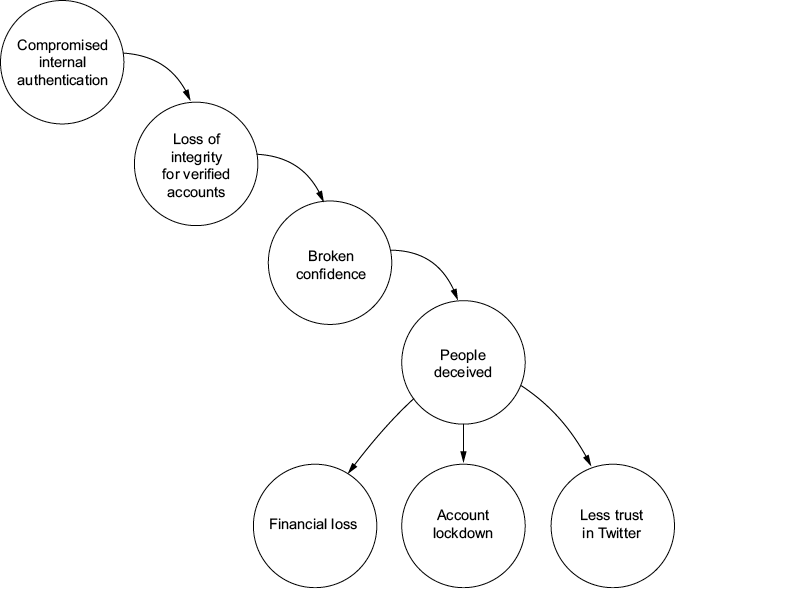
Relate failures in authentication to cascading losses of relationship integrity, confidence, and platform trust. section 3.2














