Transport Layer Security (TLS) protects communication between senders and receivers through privacy, authenticity, and data integrity. It uses symmetric encryption with a shared secret, public-key signatures, and message-integrity checks. section 5.1.1
In cloud and service-mesh deployments, TLS supports several operational responsibilities:
- Istio uses X.509 certificates to give workloads strong identities and support service-to-service authentication. section 4.3.3
- Mutual TLS encrypts service communication and authenticates peers without requiring application-code changes. section 4.3.3
- Istio agents and the Istio CA automate certificate issuance, distribution, key management, and rotation at scale. section 4.3.3
- Enterprise deployments can use an existing root or delegated CA signing certificate instead of Istio’s self-signed root. section 4.3.3
Connect Agent outbound channel
A Connect Agent can maintain a persistent TLS 1.2 connection from a Kubernetes cluster to Google Cloud. The outbound, encrypted tunnel lets Google Cloud console issue commands without exposing an inbound firewall rule or requiring a VPN; the cluster needs egress to Google Cloud APIs. section 5.1.1
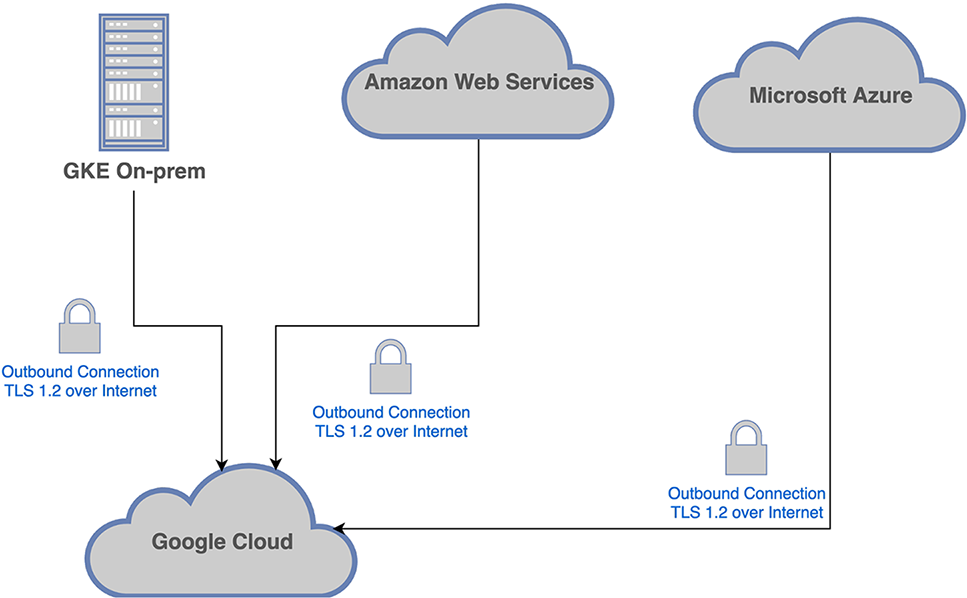
Trace the outbound encrypted connection from an Anthos deployment to Google Cloud. section 5.1.1














