liveBook · Manning

Validation

As explained in Fundamentals of Cybersecurity

Input validation is the checking of supplied data against expected formats, values, or constraints before processing it.

Input validation checks supplied data against expected formats, values, or constraints before an application processes it. Weak validation can let malicious input become executable code or alter database queries. section 12.3.2

Web application examples show how weak input checks can expose users and organizations:

  • A malicious JavaScript payload entered in a webpage form may be included in the response and run in a user's browser, enabling attacks such as cookie theft or phishing redirects. section 12.3.2
  • Crafted input in a search bar or login form may exploit how a website constructs database queries. section 12.3.2
Figure 12.2 Illustration of a Cross-Site Scripting (XSS) attack.
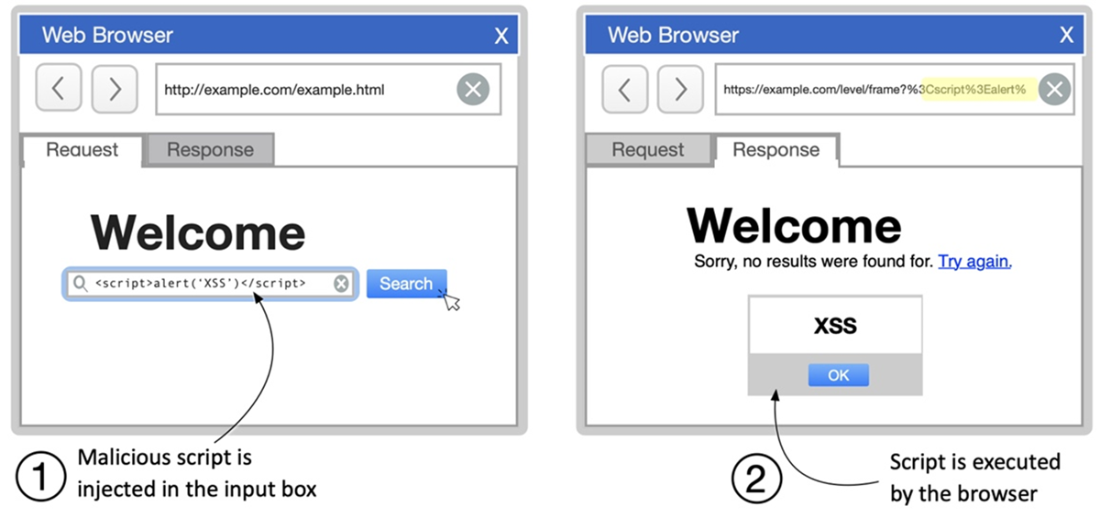
Illustrates how malicious input can pass through a webpage and execute as a cross-site scripting attack. section 12.3.2


How Fundamentals of Cybersecurity covers it

How deep it goes
Explains attack scenarios and possible impacts but stops short of implementation guidance.
Examples
Uses a JavaScript form payload, search and login inputs, and a sample SQL query.
What you can do after
Understand how weak input checks can enable script execution, cookie theft, phishing redirects, or database-query exploitation.
How it connects
Connects input validation with cross-site scripting and SQL injection.

Also explained in

Compare how 44 books explain validation →

Related concepts

This explainer was generated by Manning's knowledge graph from the text of Fundamentals of Cybersecurity. The section links point to the parts of the book it draws on.









































