Valuation
Valuation is an estimate of the economic or monetary worth of an asset, business, company, or ownership interest.

Tech Startup Toolkit
A valuation is an estimated monetary value assigned to a company or other asset, including the value represented by a public company's market capitalization.
- How it is used
- Frames fundraising, dilution, employee equity, and exit planning around what a startup is worth.
- How deep it goes
- Defines pre- and post-money value, then works through share dilution and stake-value changes without CFO-level valuation mechanics.
- Examples
- Uses a seed and Series A figure, a 1,000-share dilution scenario, and acquisition offers based on revenue multiples.
- What you can do after
- Evaluate/understand how fundraising price, ownership dilution, and business progress interact when judging a startup’s value.
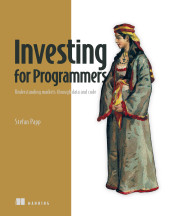
Investing for Programmers
Valuation is an estimate of the economic or market worth of an asset, company, or ownership interest.
- How it is used
- Frames valuation as a practical tool for assessing public stocks and private start-up investment opportunities.
- How deep it goes
- Explains valuation methods, ratios, risks, and a Python DCF model, but stops short of resolving uncertain forecasts or due-diligence gaps.
- Examples
- Uses a hypothetical $100 million start-up, Python DCF projections, and comparative earnings-ratio tables for NVIDIA, Apple, Sempra, Walmart, and Coca-Cola.
- What you can do after
- Evaluate companies with valuation ratios, compare market metrics, and build a basic discounted-cash-flow model in Python.
Also covered in
- Hidden InfluencesIn early access (MEAP)
What to know first
- stockStock is a financial security representing an ownership interest in a company, often divided into shares that may confer economic or governance rights.
- investorAn investor is a person or entity that commits capital or other resources to an asset or undertaking with the expectation of a return or other benefit.
- revenueRevenue is the income an organization earns from its business activities before expenses are deducted.
Related concepts
- cyclically adjusted price-to-earnings ratiomeasured by · The cyclically adjusted price-to-earnings ratio is a valuation metric that divides an asset's price by its average inflation-adjusted earnings over the preceding ten years.
- discounted cash flow modelused by · A discounted cash flow model estimates an asset's value by discounting projected future cash flows to their present value.
- financing roundproduced by · A financing round is a discrete fundraising event in which a company raises capital from one or more investors under specified terms.
- post-money valuationincludes · A post-money valuation is the value assigned to a company immediately after a new investment, including the invested cash.
- pre-money valuationincludes · A pre-money valuation is the agreed value of a company immediately before a financing investment is added.
Questions about valuation
What is valuation?
Valuation is an estimate of the economic or monetary worth of an asset, business, company, or ownership interest.
Which Manning books explain valuation?
Tech Startup Toolkit and Investing for Programmers.
What should I know before learning valuation?
Manning books that teach valuation usually introduce capital, stock, investor and revenue first.
What kinds of valuation are there?
Kinds of valuation include post-money valuation, pre-money valuation and safe-harbor valuation.
These guides are generated from the text of Manning books by Manning's knowledge graph and link to the sections they draw on. The full books are available on liveBook and at manning.com.