Asynchronous programming lets work proceed without making the caller wait for every task to finish. In distributed systems, it can keep noncritical work off the user’s request path or start independent service calls together. section 6.8.4 section 12.6.1
Choose the approach to match what the user needs to wait for:
- Defer noncritical work: verify stock and charge the card during checkout, then queue the shipping-label task for later. This avoids making checkout depend on the shipping service. section 6.8.4
- Overlap independent requests: an API aggregator can call post, author, and comment services at the same time rather than waiting for each call in sequence. It still needs to handle service failures and fallback behavior. section 12.6.1 section 12.7.2
A blog-page aggregator
A C# method starts HTTP requests to three services, then uses Task.WhenAll to wait for them together. It checks whether the core post request succeeded before assembling the page; partial failures still need deliberate fallback handling. section 12.7.2
Figure 6.14 Avoiding the Distributed Monolith: Breaking a fragile synchronous chain with an asynchronous queue ensures critical tasks succeed even if non-critical services fail.
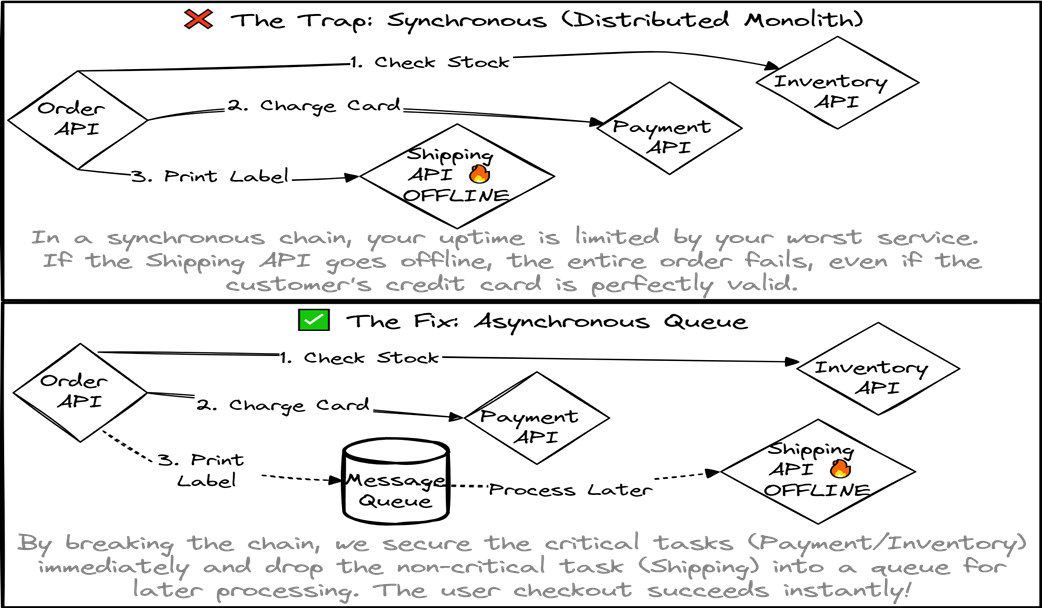
A queue breaks the synchronous order-processing chain by moving label printing out of the critical path. section 6.8.4