An asynchronous implementation lets an operation continue after its caller receives a response. For a synchronous HTTP request, this can decouple the response from work performed through messages. section 8.3.9
Choose when the HTTP controller responds:
- After processing completes: return the final outcome, but remain runtime-coupled to collaborating services; latency rises and availability falls if they are unavailable. section 8.3.9
- After sending the first message: validate using local data, update business entities, send messages, then respond. This avoids waiting for other services. section 8.3.9
Order creation
An Order Service can create an order without calling other services, respond, then validate the order asynchronously through messages exchanged with the Consumer and Restaurant Services. section 8.3.9
Figure 8.20 The Order Service creates an order without invoking any other service, which eliminates runtime coupling. The service then asynchronously validates the newly created Order by exchanging messages with other services, including the Consumer Service and the Restaurant Service.
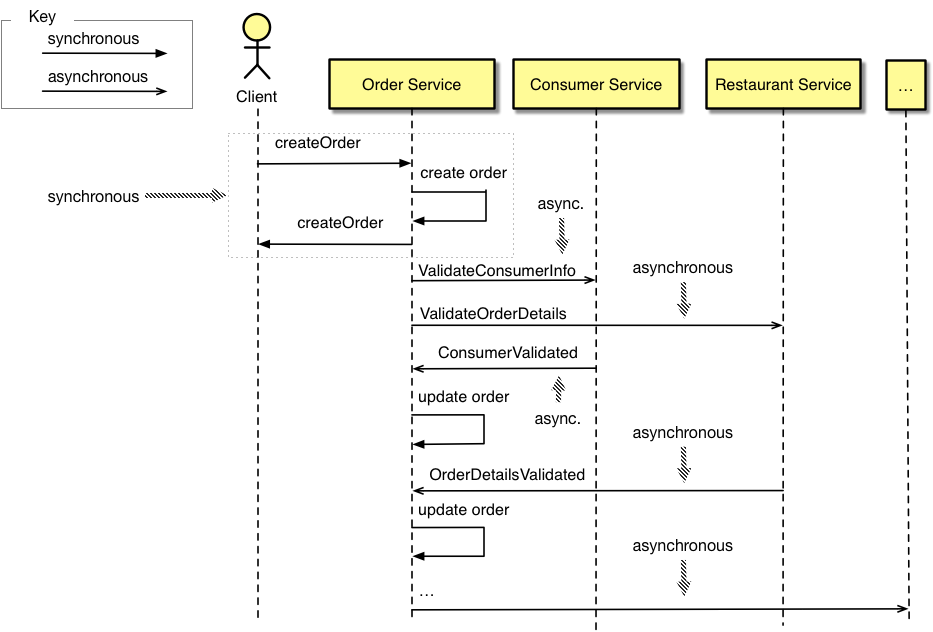
Trace how local order creation separates the HTTP response from subsequent validation by other services. section 8.3.9