liveBook · Manning

Attention

As explained in Applied Reinforcement Learning

An attention mechanism computes input-dependent weights to combine representations according to their relevance to one another.

Attention computes weighted combinations of representations, giving more weight to items relevant to one another. In cooling control, it lets each zone incorporate information from other zones instead of treating them in isolation. section 9.5

This matters when zones interact: a temperature spike in one zone may affect its neighbors, and a coordinated cooling response depends on their conditions. Attention supports information sharing and adaptive feature extraction; the Transformer is one embodiment. section 9.5

Checking for a temperature spike

A building manager noticing a spike in zone 3 checks neighboring zones 2 and 4 and the workload distribution before responding. Attention applies this selective, contextual focus to zone representations. section 9.5

Figure 9.6 The Attention Mechanism — Query, Key, Value.
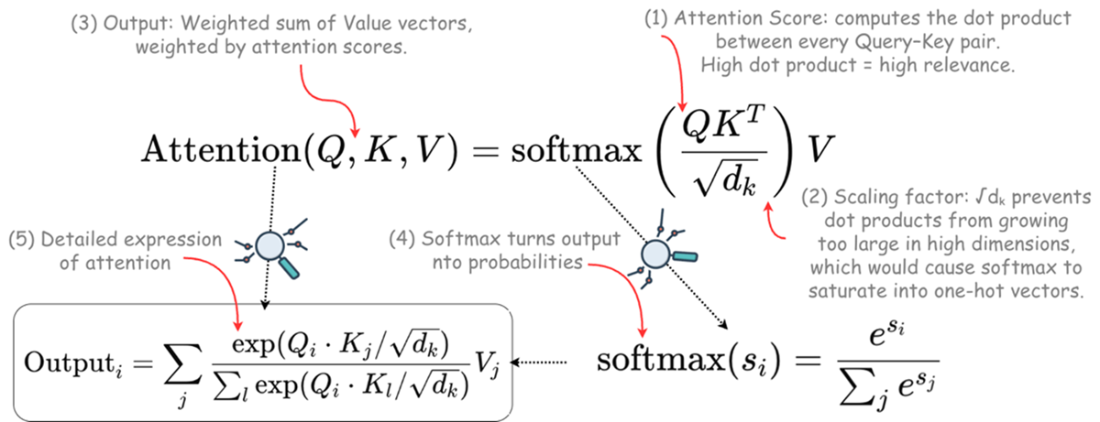
Use the query-key-value diagram to visualize the attention mechanism. section 9.5

How Applied Reinforcement Learning covers it

How deep it goes
Defines attention as weighted combinations and explains its role in zone representations and adaptive feature extraction.
Examples
Uses data center cooling zones and a manager checking neighboring temperatures and workloads.
What you can do after
Understand how attention can help a policy coordinate decisions across interacting zones.
How it connects
Links attention to reinforcement learning, REINFORCE, policy gradient methods, and the Transformer architecture.

Also explained in

Compare how 40 books explain attention →

Related concepts

This explainer was generated by Manning's knowledge graph from the text of Applied Reinforcement Learning. The section links point to the parts of the book it draws on.