Statistical bias is a systematic discrepancy between observed outcomes and the target relationship. In lending, higher rejection rates for men may reflect ad targeting that reached less-qualified men, prejudicial loan officers, or both. Without causal context, a learning algorithm sees only the pattern and can reproduce it. section 1.3.4
Causal analysis separates the pattern into:
- Potentially fair selection effects, such as digital advertising targeting applicants with different qualification profiles. section 1.3.4
- Unfair decision effects, such as loan officers applying sexist policies. section 1.3.4
- Proxy-driven discrimination: removing gender labels does not prevent names or other application features from encoding gender. section 1.3.4
Figure 1.3 A causal directed acyclic graph (DAG) showing how statistical bias against a particular gender could come from an algorithm directly penalizing that gender (unfair) and indirectly through gender discrepancies in applicants targeted by digital advertising algorithms (fair). Causal inference can parse the bias into fair and unfair sources.
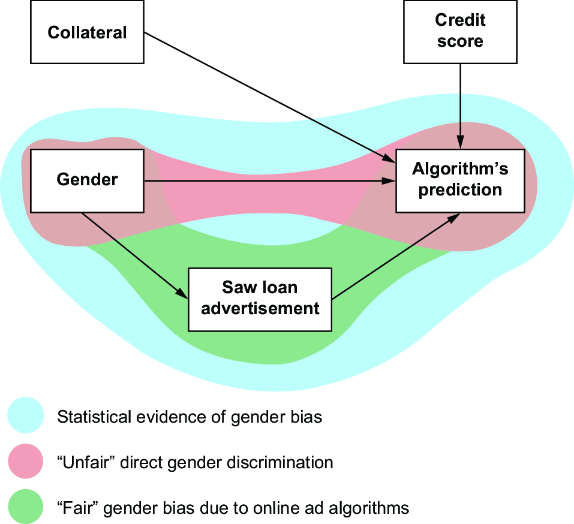
Use the causal DAG to trace direct and indirect pathways producing gender-related statistical bias and distinguish fair from unfair sources. section 1.3.4



























