A code review is an organized process for inspecting code against agreed standards before it becomes part of a larger codebase. It combines technical judgment with communication, shared ownership, and team-defined rules. Done consistently, it improves application quality, code clarity, maintainability, security, knowledge distribution, and the historical record of why changes were made. section 1.6 section 1.3.1
When review is missing
A developer merges an invoice parser containing workarounds and an incorrect fee calculation before leaving for vacation. Colleagues later cannot understand or safely modify it before a CEO demonstration. Review could have exposed the defect and improved the code’s readability before release. section 1.0
A modern review usually includes these elements:
- New or changed code prepared for inspection. section 2.2.1
- One or more reviewers, ideally people other than the author. section 2.2.1
- A reviewing mechanism, such as a pull request, merge request, email patch, meeting, or over-the-shoulder inspection. section 1.6 section 2.2.1
- A signoff condition that determines when the review is complete. section 2.2.1 section 2.2.2
In a pull request workflow, opening the pull request signals that review is pending; reviewers discuss the change through comments; approval by one or two reviewers completes the process. Teams can choose stricter or lighter procedures according to trust, experience, domain knowledge, team change, regulatory pressure, production incidents, and established communication patterns. section 2.2.2 section 2.4.3
Effective review is not merely defect hunting. Reviewers examine clarity, complexity, consistency, scalability, tests, coding conventions, code smells, edge cases, and how an isolated change fits the larger system. Passing unit tests does not guarantee correctness: a change may retrieve data from the wrong cache while all tests pass. section 3.1.1 section 3.1.2
Teams establish the process collaboratively by agreeing on goals, reviewer selection, approval counts, response times, emergency handling, tools, workflow, and review guidelines. A living Team Working Agreement records these decisions. A cohesive environment—marked by respect, psychological safety, humility, and shared accountability—makes feedback more useful and the process more durable. section 1.4 section 1.5
Figure 2.3 A pull request-based code review workflow
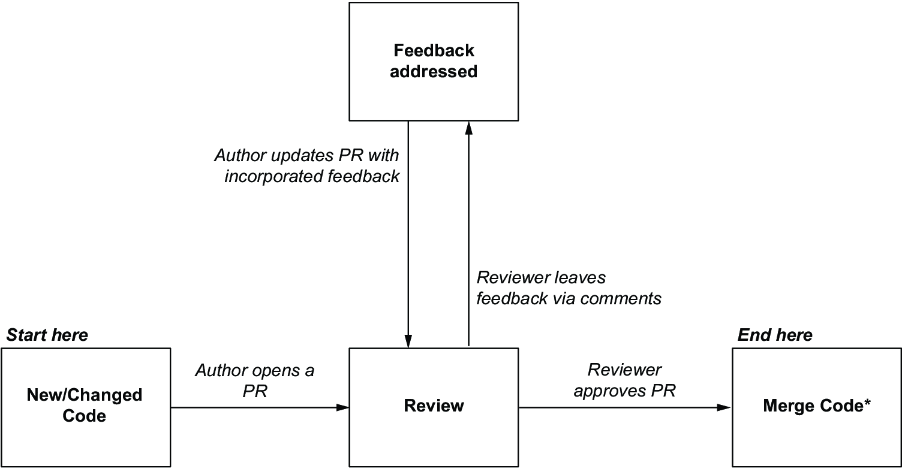
Use the workflow diagram to trace a pull request from opening through discussion and reviewer approval. section 2.2.2









