Data augmentation creates extra training examples by applying transformations or alterations to existing data. It broadens narrow datasets so models are less likely to learn coincidental features and can become more robust and general. section 7.2.1
Use augmentation processes to widen the signals available during training:
- Images: rotate, mirror, scale, reposition, invert, alter contrast or brightness, add objects, and introduce noise or distortions. section 7.2.1
- Text: add spelling errors, replace non-stop words with synonyms, or use auto-translation to change phrasing. section 7.2.1
- Pipelines: preserve maintainable infrastructure so new manipulations can be added while models are tested and compared. section 5.4
Augmenting a cat image
Start with one cat image, then generate additional examples by rotating, adding objects, introducing noise, inverting, scaling, repositioning, and mirroring it. section 7.2.1
Figure 7.3 Augmenting an image of a cat with simple manipulations (Wikipedia commons, https://commons.wikimedia.org/wiki/File:Black_and_White_Cat_Sketch.svg).
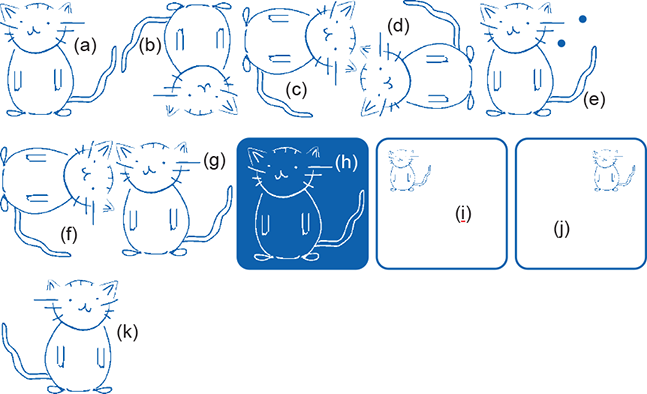
Inspect the visual sequence of simple image manipulations used to create augmented examples. section 7.2.1









