Data collection gathers the examples needed after defining a machine-learning task, its inputs, and its targets. It is often the most arduous, costly, and time-consuming project stage. section 6.1.2
Different projects, different data strategies
A photo search engine may require hundreds of thousands of manually labeled images. Encrypted chats may require a separate social-media dataset, while recommendation and click-through systems can reuse existing likes and advertising records. A cookie model may need cameras and factory workers to label images; satellite analysis may need archaeologists to assemble sites and images across weather conditions. section 6.1.2
Use these practical rules when allocating effort:
- Treat dataset size, label reliability, and feature quality as core assets because they largely determine generalization. section 6.1.2
- When extra project time is available, collecting more data may outperform searching for incremental modeling improvements. section 6.1.2
“DEWEY DEFEATS TRUMAN”: a famous example of sampling bias
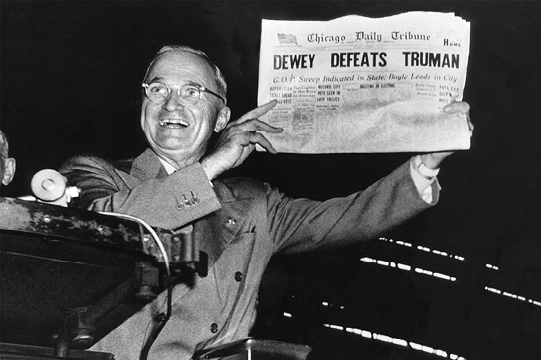
Use the historical headline to inspect how sampling bias can distort a dataset. section 6.1.2









