Data collection systematically gathers information for analysis. It begins by operationalizing concepts into clear, observable, measurable indicators, then selecting a suitable collection method. section 6.2
Methods may use direct measures, recorded firsthand by a researcher, or indirect measures drawn from existing information such as historical archives. Available organizational data often combines primary systems and third-party applications. section 6.2 section 6.2.3
Evaluate whether collected or available data can measure the behavior of interest by checking:
- The data source and whether it is primary, third-party, or a curated combination. section 6.2.3
- The refresh rate and whether stakeholders can rely on hourly, daily, or less frequent updates. section 6.2.3
- Whether each record represents an object or an action, since objects may provide limited behavioral insight. section 6.2.3
- Whether changes are tracked, rather than silently editing records in place. section 6.2.3
From records to behavior
A sales transaction, software-use record, support ticket, or user click can represent different levels of activity. A database row recording a doctor’s visit captures a visit record, while a page-view row may combine visitor and page information at a particular aggregation level. section 6.2.3
Figure 6.11 A few simple queries can help determine if there are problems with the quality of your data.
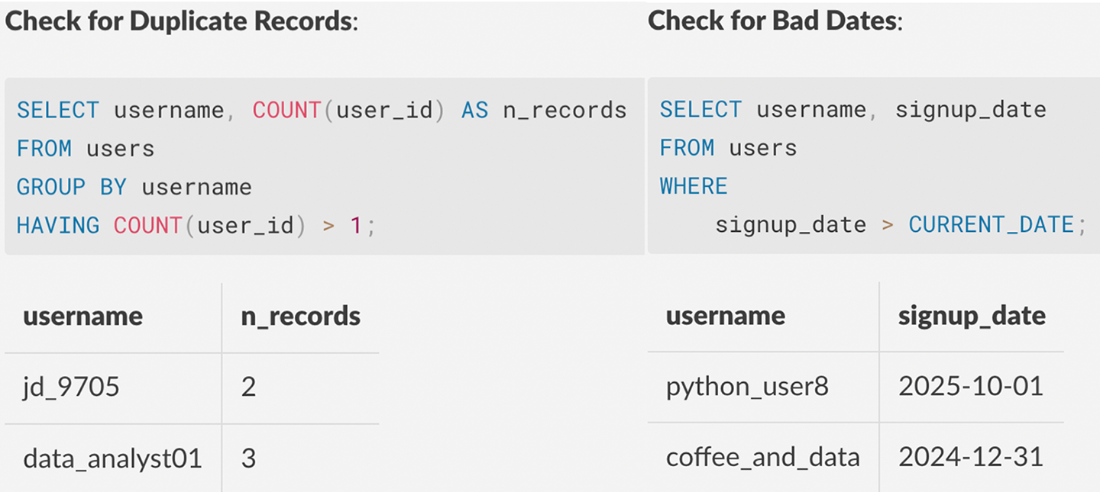
Use simple queries to inspect data quality before treating a dataset as evidence for behavior. section 6.2.3









