liveBook · Manning

Preprocessing

As explained in Evolutionary Deep Learning: Genetic algorithms and neural networks

The process of cleaning, transforming, and organizing data for machine-learning analysis or training.

Preprocessing prepares and cleans data before AI/ML training. It is a practical bottleneck: preparation is time-consuming and expensive, yet can substantially improve data workflows and model performance. section 1.4.1

Within an automated machine-learning workflow, preprocessing:

  • Precedes feature engineering, model selection, and model-architecture decisions. section 1.4.1
  • Can be automated in several ways using evolutionary methods, although the approach is not specific to evolutionary deep learning. section 1.4.1
  • Remains a responsibility users may need to complete before applying automated machine-learning services. section 1.4.1
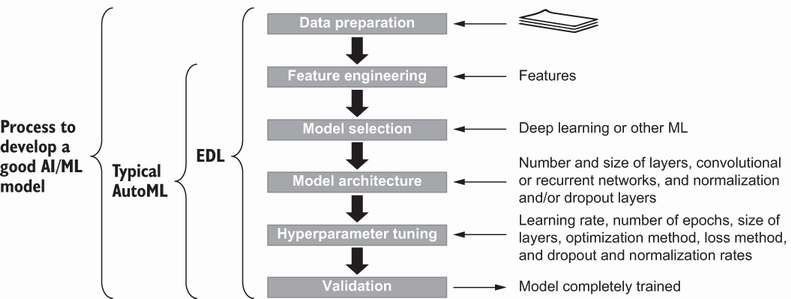
Figure 1.3 Steps for developing a good AI/ML model with AutoML and/or EDL

Use the workflow diagram to place preprocessing alongside feature engineering, model selection, and architecture design. section 1.4.1


How Evolutionary Deep Learning: Genetic algorithms and neural networks covers it

How deep it goes
Frames preparation as costly and automatable but defers concrete cleaning procedures to later treatment.
Examples
Uses the AutoML workflow diagram and names Azure Machine Learning, AutoKeras, and AutoTorch as automation platforms.
What it assumes
Assumes familiarity with AI/ML training workflows and notes that many services expect prepared and cleaned data.
What you can do after
Evaluate where data preparation fits in an automated machine-learning workflow and why it matters for model performance.
How it connects
Connects preprocessing with feature engineering, model selection, model architecture, AutoML, and evolutionary methods.

Also explained in

Compare how 22 books explain preprocessing →

Related concepts

This explainer was generated by Manning's knowledge graph from the text of Evolutionary Deep Learning: Genetic algorithms and neural networks. The section links point to the parts of the book it draws on.



















