liveBook · Manning

Preprocessing

As explained in The Art of AI Product Development

Preprocessing is the transformation and preparation of raw data before it is supplied to a machine-learning model.

Preprocessing transforms raw data into a numerical representation that an AI model can consume. It may also include cleaning data without changing its modality. section 3.1.1

One-hot encoding

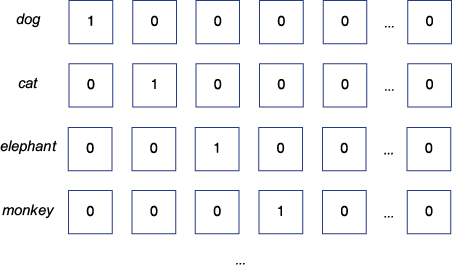
In natural-language processing, one-hot encoding represents each word as a vector containing zeros and one identifying value. This is simple but coarse, so useful information may be lost; more informative word embeddings are introduced later. section 3.1.1

Treat preprocessing as a strategic modeling decision:

  • Convert non-numerical modalities into internal numerical representations before feeding them to a model. section 3.1.1
  • Check which task-relevant information the transformation discards. section 3.1.1
  • Plan modality-specific ramp-up when the team’s existing technical skills do not match the data. section 3.1.1
Figure 3.4 One-hot encoding provides a simple numerical (algebraic) representation of words.
A screenshot of a computer

AI-generated content may be incorrect.

Use the one-hot encoding figure to inspect how words become simple numerical vectors. section 3.1.1


How The Art of AI Product Development covers it

How deep it goes
Defines numerical transformation, cleaning, and information loss, but stops short of detailing embedding implementation.
Examples
Uses one-hot word vectors, word embeddings, and numerical financial or statistical data as examples.
What it assumes
Assumes awareness of raw data modalities while establishing that model inputs must ultimately be numerical.
What you can do after
Evaluate preprocessing choices by checking model compatibility, modality expertise, and task-relevant information loss.
How it connects
Connects data cleaning, natural-language processing, one-hot encoding, word embeddings, and machine learning.

Also explained in

Compare how 22 books explain preprocessing →

Related concepts

This explainer was generated by Manning's knowledge graph from the text of The Art of AI Product Development. The section links point to the parts of the book it draws on.



















