A false negative occurs when a classifier reports a negative or low-risk condition even though a positive or high-risk condition is present. It is a missed threat, so accuracy alone can conceal operational danger. section 4.6.3
Treat false negatives as a threshold and routing risk:
- Lowering a classification threshold generally catches more high-risk cases, increasing recall while also increasing false positives. section 4.6.5
- Raising the threshold can preserve precision but miss genuine risks as false negatives. section 4.6.5
- A cheap first-pass model can silently discard issues that a stronger second-pass model would have found. section 9.2.4
- Measure misses with a random shadow sample instead of assuming that cleared cases are safe. section 9.2.4
Medical risk classification
A medication-risk classifier detected most high-risk medicines, with recall of 93%, but still missed a small fraction as false negatives. Lowering the cutoff could catch more threats when safety matters more than avoiding false alarms. section 4.6.3 section 4.6.5
Two-pass code review
A Haiku filter routed flagged files to Sonnet while ordinary cleared files skipped the expensive review. The savings were real, but every issue Haiku missed silently became a false negative unless sampled and measured. section 9.2.4
Figure 4.11 Precision vs. Recall at Different Thresholds.
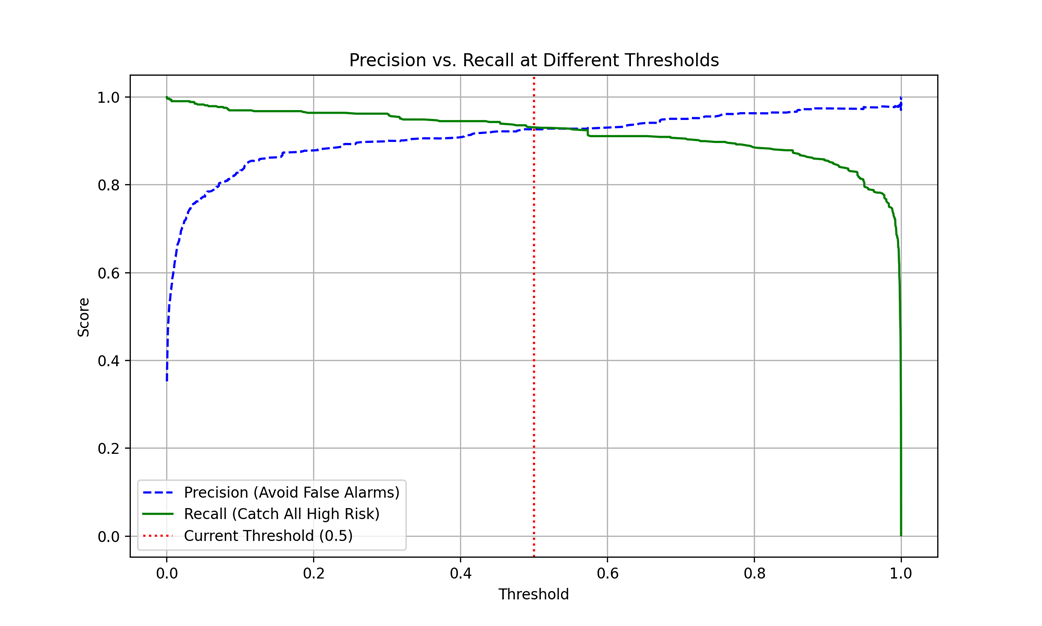
Use the precision–recall threshold plot to inspect how changing the cutoff shifts missed high-risk cases and false alarms. section 4.6.5















