A false negative is a missed alarm: the system says an event is absent even though it is present. In classification, it is also called an FN or Type II error. section 8.7
False negatives become useful when compared with the other outcomes:
- A false positive raises an alarm when the event is absent; a false negative stays silent when the event is present. section 8.7
- A confusion matrix records false negatives alongside true positives, true negatives, and false positives, separating correct predictions from errors. section 8.8
- The preferred balance depends on consequences: a system guarding against physical harm may accept more false alarms to reduce missed alarms. section 8.7
The wolf alarm test
Over 100 days, an alarm missed a wolf once and falsely reported a deer as a wolf once. Those are one false negative and one false positive. The system still claims 98% accuracy, but it caught no actual wolves; predicting “no wolf” every time would reach 99% accuracy because wolves are rare. section 8.8
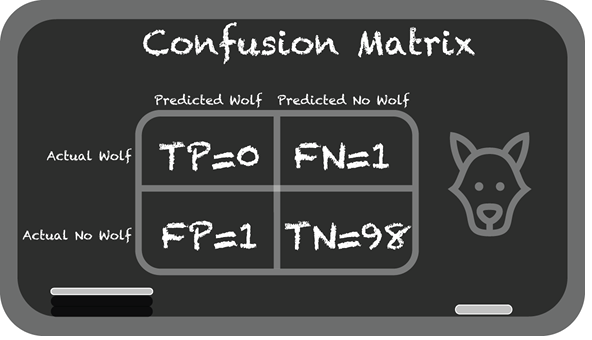
Use the confusion-matrix figure to locate false negatives among actual and predicted classes and to see why accuracy can conceal missed events. section 8.8












