A gradient is a vector of partial derivatives of the loss function with respect to model parameters. It indicates how each weight or bias should change, so gradient descent updates parameters in the opposite direction. section 8.1.1
Gradient-based training connects the update direction to several training controls:
- The learning rate scales each update; excessive values can overshoot a minimum, while small values slow convergence or stall progress. section 8.1.1
- Batch size determines how many data points contribute to each gradient calculation, affecting convergence stability and speed. section 8.1.1
- Epoch count controls how often the dataset is revisited; excessive training can overfit, making early stopping a regularization measure. section 8.1.1
Figure 8.1 Gradient descent with lr = 0.1, demonstrating faster convergence
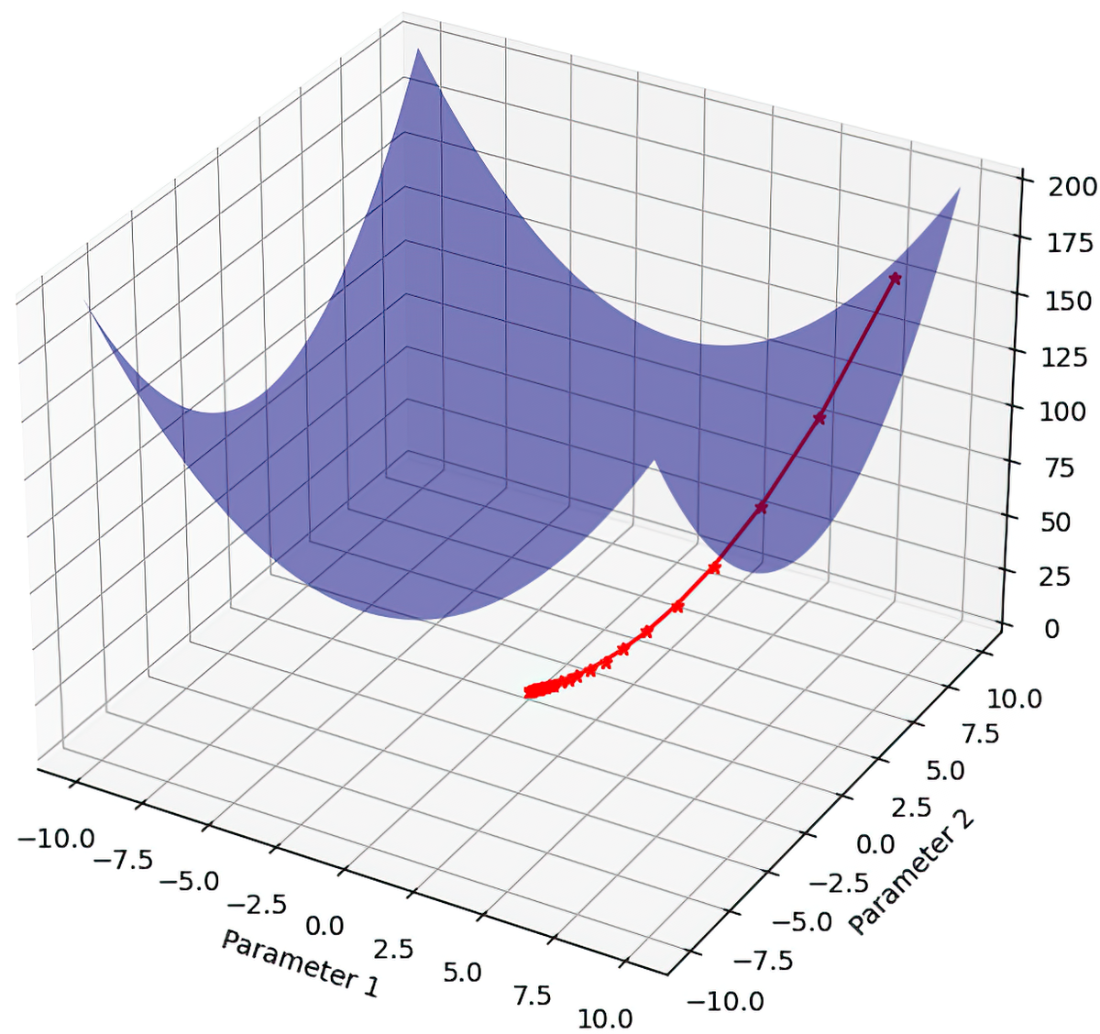
Compare a larger learning rate with faster convergence in gradient descent. section 8.1.1
Figure 8.2 Gradient descent with lr = 0.01, illustrating stability in convergence
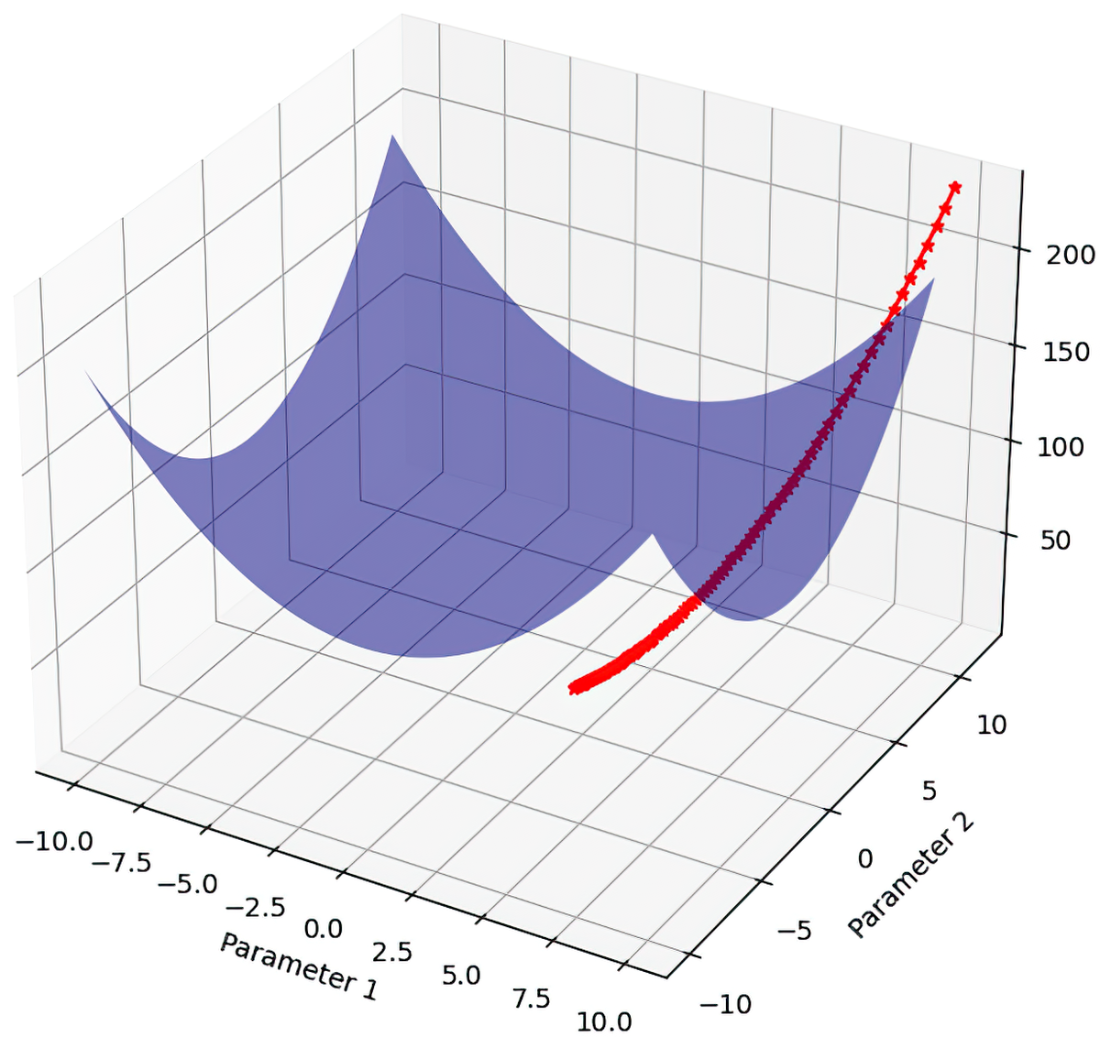
Contrast a smaller learning rate with more stable convergence in gradient descent. section 8.1.1



















