A key performance indicator (KPI) is a selected metric for evaluating progress toward an important security or business objective. Effective KPIs do more than record conditions: they support decisions, show whether initiatives reduce risk, and connect cybersecurity performance with organizational outcomes. section 3.2.5 section 4.1.2
Useful KPIs support a measurable improvement cycle:
- Establish a baseline before changing tools, processes, or training. section 3.2.5
- Set specific, measurable targets and monitor the same measures afterward. section 3.2.5
- Tailor the presentation to the stakeholder: executives need risk and business effects, while responders need alerts and threat detail. section 3.4.1
- Map security results to business continuity, operational efficiency, customer trust, compliance, or financial effects. section 4.1.2
HealthSecure investment report
A board presentation uses incident response time, ransomware mitigation, HIPAA compliance, cost savings, and system uptime to show the effect of a $500,000 threat-detection investment. Response time falls from 24 to 4 hours, no successful ransomware attacks occur during the year, HIPAA audits pass at 100%, and estimated total value reaches $3 million. section 4.3.4
Figure 3.3 Example report showing some graphics that can be used to help drive the store behind the metrics
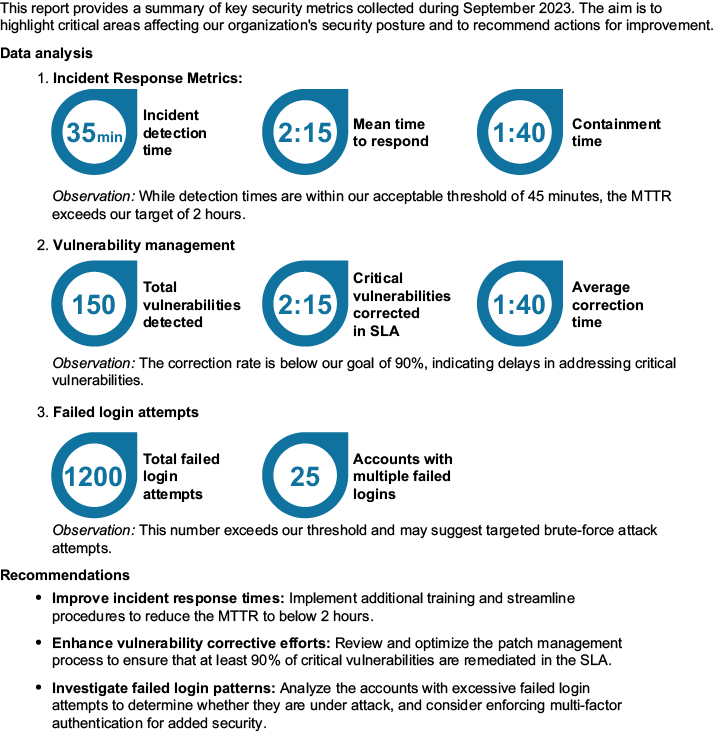
Use the example report graphics to connect KPI trends with security improvements and leadership decisions. section 3.2.5





