A key performance indicator (KPI) is a selected measurable value used to evaluate progress toward an important organizational or operational objective. Platform teams use KPIs to connect their operating model with evidence of platform value. section 3.6
Effective platform measurement combines outcome-oriented lagging metrics with leading indicators. Lagging metrics show results; leading metrics expose bottlenecks and improvement opportunities early enough to influence those results. section 10.1.2
Examples of useful KPI pairings include:
- Deployment frequency with the percentage of automated deployments and deployment frequency per team. section 10.1.2
- Lead time for changes with time spent in build, test, and approval pipeline stages. section 10.1.2
- Change failure rate with code-quality violations, test coverage, and the ratio of manual to automated tests. section 10.1.2
Epetech’s measurement approach
Epetech aligned platform KPIs with its platform value model and the DORA framework. It used leading metrics to investigate why deployment outcomes changed and to target automation, pipeline, or quality improvements. section 10.1.2
Figure 10.2 Key leading metrics used by Epetech to understand and use the DORA lagging metrics
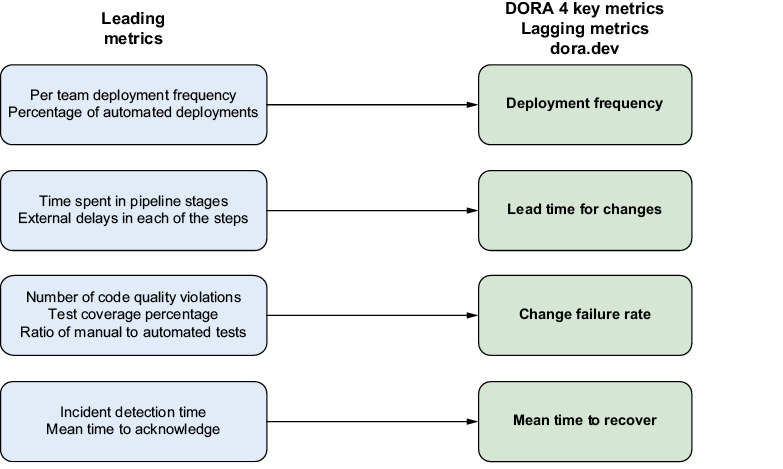
Use the figure to navigate the relationship between Epetech’s leading metrics and DORA’s lagging metrics. section 10.1.2





