LangChain is a general-purpose framework for composing language models with prompt templates, constructed context, memory, tools, and workflow logic. It helps teams move from ad hoc prompt experimentation toward reusable components, controlled iteration, and application integration. section 6.4.2 section 9.2.3
Use LangChain to support practical development work such as:
- Modularize prompts and reuse templates while teams iterate on application behavior. section 6.4.2
- Construct context, manage memory, and connect language models to tools and workflows. section 6.4.2 section 9.2.3
- Version prompt changes so teams can review experiments, avoid duplicated work, and roll back disruptive edits. section 6.4.2
A prompt-development workflow
As an application approaches release, Alex adopts LangChain to organize reusable prompts, context construction, and memory management. Version control lets the team test changes confidently and restore earlier prompts when a small modification harms another feature. LangChain offers broad flexibility, but its range of functionality can sometimes make it feel overengineered. section 6.4.2 section 9.2.3
Figure 9.14 Agents need short-term memory for the current session and long-term memory for learning and improvement over time.
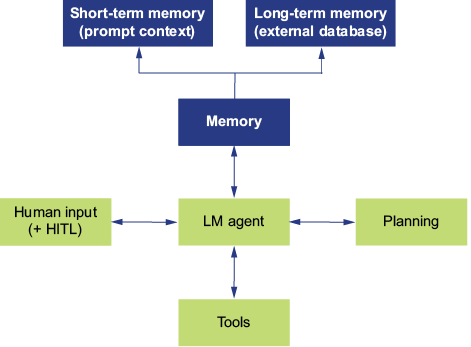
Relate LangChain's memory and agent workflows to the distinction between short-term session memory and long-term learning or improvement. section 9.2.3


















