A constraint is a limitation or condition that narrows viable architectural choices. Time, budget, team capability, risk tolerance, legacy systems, ownership, legal implications, and organizational structure do not sit outside design; they determine what can realistically be delivered, operated, and evolved. section 1.0 section 1.8
Constraints matter because architecture is a negotiation between what is desirable and what is feasible. A technically elegant option can still fail if the team cannot sustain it, operations cannot support it, or its cost and risk exceed what the organization accepts. The aim is not a universally perfect design, but a viable balance with consequences made explicit. section 2.0 section 2.7
Treat these forces as architectural inputs rather than late objections:
- Time-to-market: deadlines can favor simpler choices, while rushed decisions can reduce design quality. section 2.0
- Cost: limited funding can restrict resilience, platforms, and the complexity the organization can carry. section 2.0
- Team capability and cognitive capacity: a design that exceeds available skills or ownership capacity becomes hard to support and evolve. section 2.0 section 2.7
- Risk tolerance: delivery, operational, compliance, and long-term uncertainty determine where compromise is acceptable and where rigor is required. section 2.7 section 3.7
- Legacy, ownership, and organizational boundaries: existing systems and unclear accountability can make an otherwise plausible design impractical or unnecessary. section 1.0 section 1.3
Figure 2.1 Architectural decisions do not emerge from a single requirement. They are shaped by the combined pressure of time, cost, team capability, and risk tolerance.
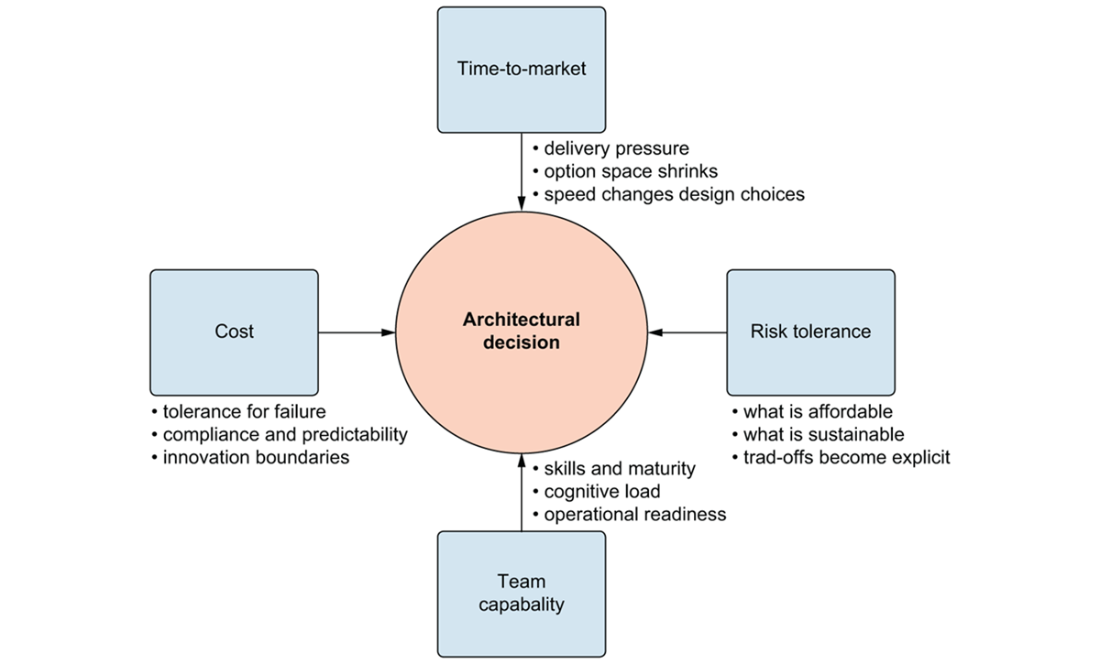
Compare time, cost, team capability, and risk tolerance together: their combined pressure defines feasible choices and acceptable trade-offs. section 2.0
Expose constraints by clarifying vague intent before selecting a solution. “Faster” may mean lower latency, higher throughput, quicker recovery, or less waiting for users. Ask what load is expected, which failures are acceptable, and which conditions cannot change; then translate the answers into targets, boundaries, operational requirements, and trade-offs. section 1.4
When success becomes a constraint
A consumer-facing application can be adequate for expected demand yet become unsafe after rapid growth. Rising request volume, queue length, response time, storage throughput, error rates, and manual operational work reveal capacity assumptions failing. The useful response is not to build for unlimited scale initially, but to identify thresholds, bottlenecks, contingency options, and decisions that will be expensive to reverse. section 4.1
Revisit constraints as conditions change. Good-enough architecture solves the current problem without buying future complexity too early, preserves room to evolve, and delays high-consequence commitments until enough is known. Protect areas such as security, data integrity, compliance, and mission-critical resilience with greater rigor. section 3.7 section 1.8




























