liveBook · Manning

Mcp client

As explained in Hugging Face in Action

An MCP client is an AI assistant or application component that sends requests to an MCP server to access external tools or data.

An MCP client is an AI assistant or application component that requests external tools or data through an MCP server. It consumes services such as executable tools and accessible resources, while JSON-RPC 2.0 structures communication between client and server. section 13.1.2

Choose the client–server transport according to deployment:

  • Use standard input and output streams when the client and server run on the same machine. section 13.1.3
  • Use HTTP POST from the client and server-sent events from the server when the server runs remotely or supports multiple clients. section 13.1.3

Claude Desktop

Claude Desktop is an example of an AI-powered application acting as an MCP client, accessing services exposed by MCP servers. section 13.1.2 section 13.5

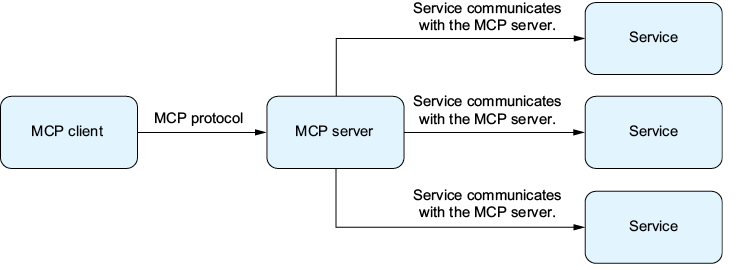
Figure 13.3 How an MCP client communicates with an MCP server
A diagram of a service communication system

AI-generated content may be incorrect.

Visualizes how an MCP client communicates with an MCP server. section 13.1.2

How Hugging Face in Action covers it

How deep it goes
Defines the client’s role and transport options, without detailing client implementation code.
Examples
Uses Claude Desktop as an AI-powered client example and illustrates local and remote client-server arrangements.
What you can do after
Operate MCP clients to access tools and data through local stdio or remote HTTP POST and SSE connections.
How it connects
Links MCP servers, services, tools, resources, JSON-RPC 2.0, standard input/output, HTTP POST, and server-sent events.

Also explained in

Compare how 8 books explain mcp client →

Related concepts

This explainer was generated by Manning's knowledge graph from the text of Hugging Face in Action. The section links point to the parts of the book it draws on.






