A multi-agent system uses multiple agents that interact or collaborate to solve tasks. Agents may run on separate model instances or share a common model backbone. section 2.6.1 section 2.6.1
Code generation and review
One agent generates code while another reviews or tests it. Collaboration can catch mistakes, but coordinating agents adds complexity and failure paths. section 2.6.1
Agent interactions can be fast and hard to inspect. As autonomy, tool access, and workflow involvement increase, so can the reach and scale of harm; individually acceptable steps may combine into an outcome no reviewer would approve. section 6.7 section 6.7
Figure 2.6 A high-level architecture of how a multi-agent system works[22]. Agents may use in separate model instances or share a common backbone model.
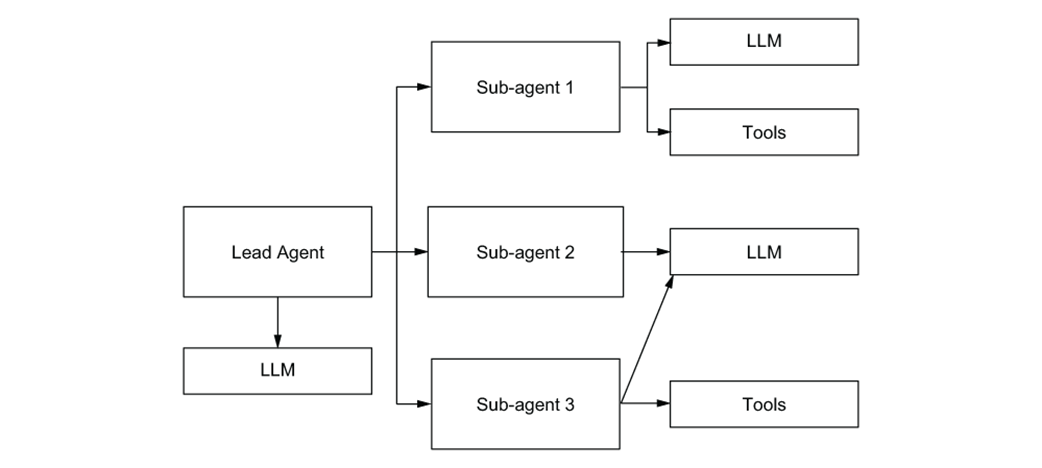
Use the architecture overview to see how agents may be arranged around separate or shared model instances. section 2.6.1












