A multi-agent system replaces one overloaded “super-agent” with a team of specialized agents. Each agent has a focused responsibility and limited scope, while the overall system coordinates their work. section 6.1
Common structures organize collaboration in different ways:
- Sequential structures run agents in a fixed order when each step depends on the previous one. section 6.6
- Hierarchical structures use a supervisor agent to delegate tasks dynamically to specialized agents. section 5.5 section 6.6
- Role-based agents improve modularity, specialization, control, maintainability, and debugging by limiting responsibilities and defining communication. section 6.1 section 6.6
A customer-success team
A coordinator routes questions to billing, technical support, or documentation-retrieval agents. Each subagent uses a narrow toolset and contributes to the larger workflow. section 5.5
Figure 6.1 It’s difficult to be a solo agent with too much on its plate!
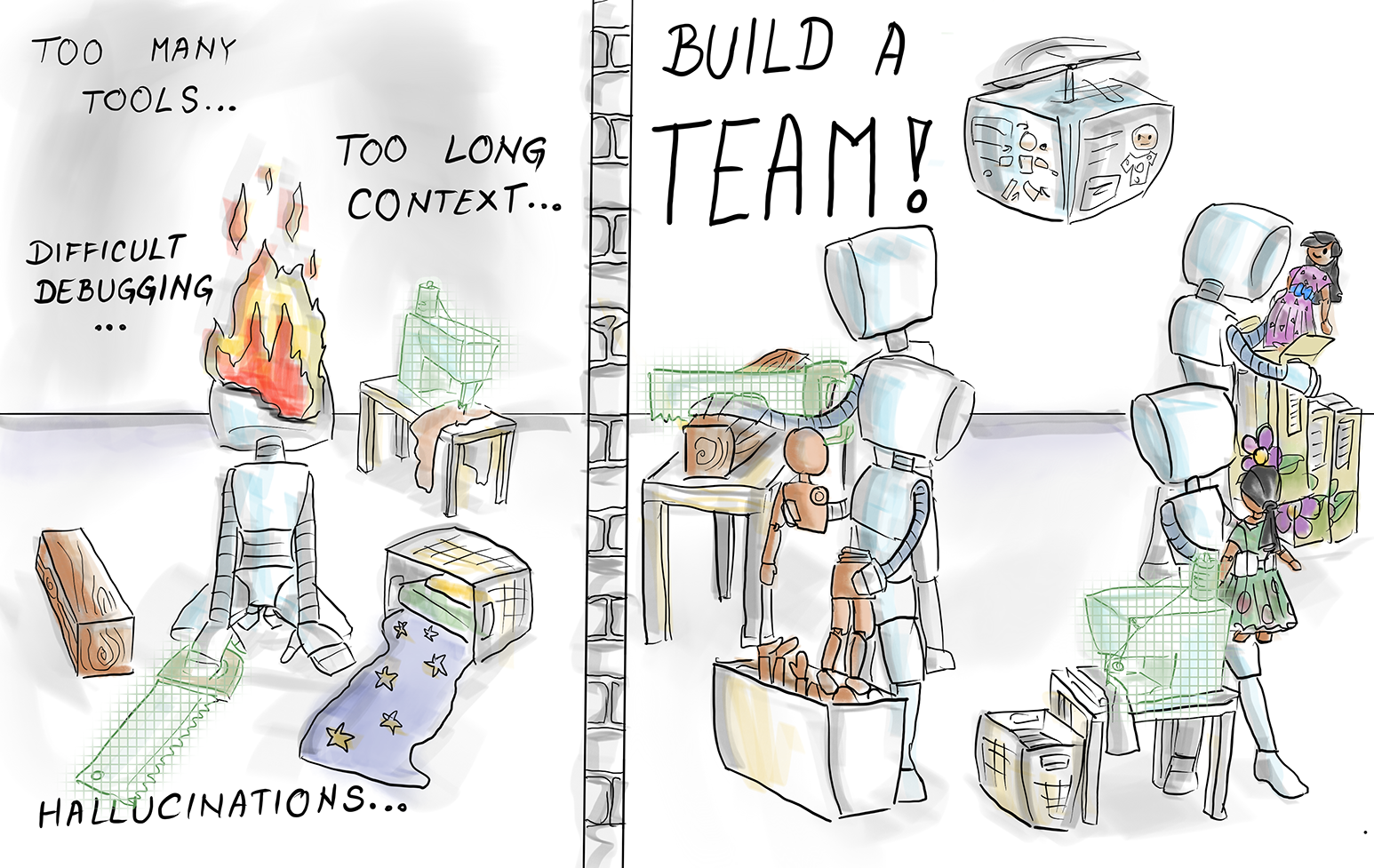
Use the figure to visualize why distributing responsibilities across agents is preferable to overloading a solo agent. section 6.1








