A node is a graph element representing an entity, concept, idea, or word. People, organizations, cities, services, and biomedical concepts can all become nodes, while relationships provide the surrounding context. section 1.0 section 1.3
Nodes support several practical graph-analysis patterns:
- Model entities connected to others of the same type, such as User nodes linked by FRIEND relationships or Service nodes linked by DEPENDS_ON relationships. section 1.2.1
- Represent locations in pathfinding networks, such as cities connected by road, railroad, or bike relationships. section 1.2.2
- Use node structure with graph algorithms to identify important nodes, connected groups, optimal paths, or inputs for machine-learning workflows. section 1.3
Cities as nodes
A transportation graph models Antwerp, Rotterdam, The Hague, and Amsterdam as nodes. Relationships record available travel modes and their costs, such as biking from Antwerp to Rotterdam or taking a train from The Hague to Amsterdam. Queries can then compare routes by time, distance, or cost. section 1.2.2
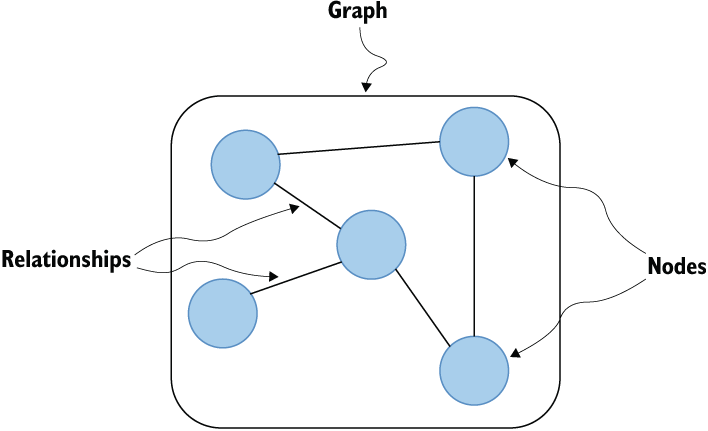
Use the graph representation to see nodes and relationships together rather than inspecting isolated table or document records. section 1.0


















