Prompt engineering is the creative, structured design and refinement of prompts to guide large language model responses. Clear, relevant context helps align an answer with the task; prompts that are too vague or overloaded can invite tangents or misinterpretation. section 3.0 section 3.1
Figure 3.4 Role, Task, Features, and Examples—elementary, my dear Watson
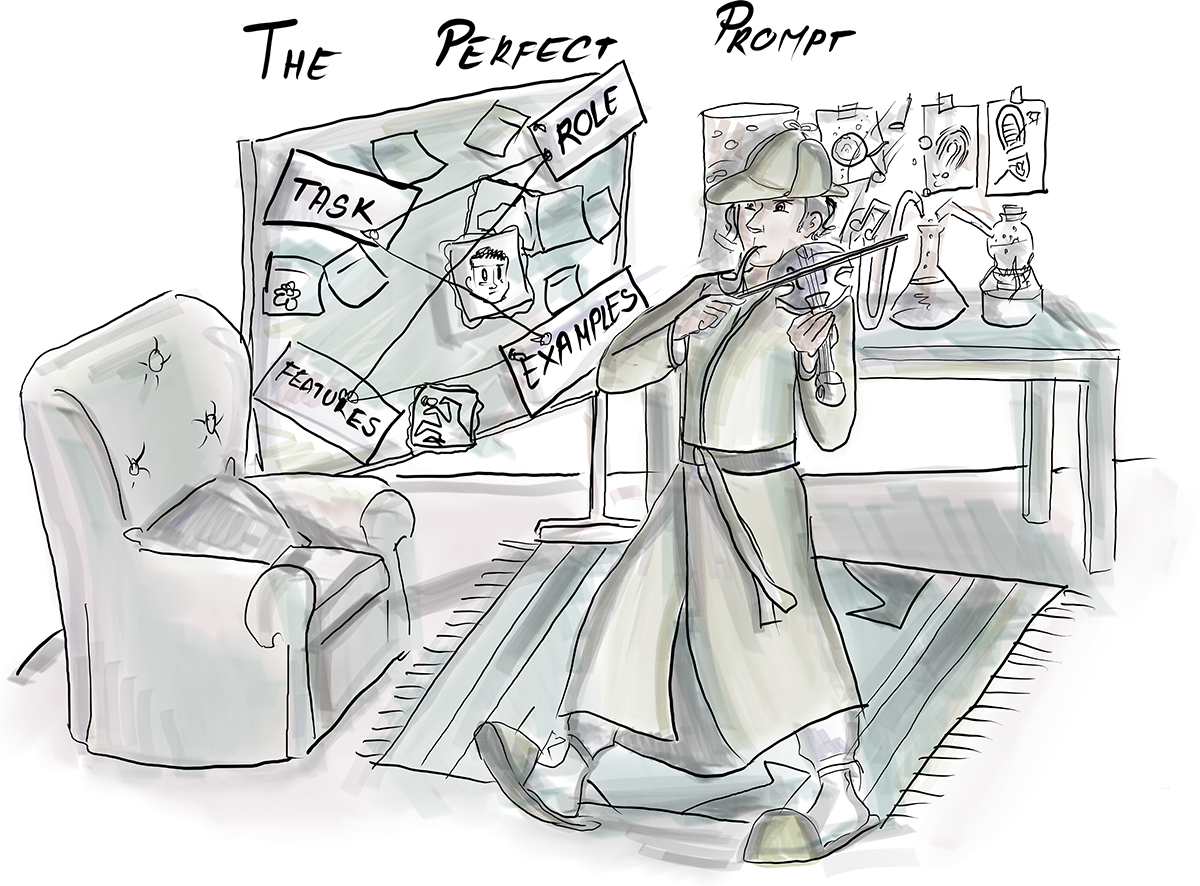
The diagram names four parts of a prompt template: role, task, features, and examples. section 3.1
Refine prompts with techniques such as:
- Repeat critical instructions, or specify a fallback such as “not found” when the answer is unavailable. section 3.2
- Break complex requests into smaller steps, ask for step-by-step reasoning, or request self-validation. section 3.2
- Use enough relevant context to guide the response, while avoiding unnecessary detail; prompt improvements can reduce but do not eliminate hallucinations. section 3.1