Return on investment compares the value or savings generated by an initiative with the money spent on it. It asks how much the business receives for every dollar invested, although predictions can be difficult for visionary projects. section 3.6.4
Build a defensible ROI case by:
- Converting support activity into hourly costs so recurring tickets and service demands become visible financial measures. section 2.2.1
- Estimating direct savings from retiring legacy systems, including licenses, support contracts, hardware, hosting, and management effort. section 3.6.4
- Seeking peer input when benefits involve new markets, increased revenue, or broader changes to business operations. section 3.6.4
- Recognizing that management-wide agreement may sometimes justify an initiative when ROI cannot be measured reliably. section 3.6.4
A small automation with immediate ROI
A support desk found that password resets represented 60% of ticket requests. Once the hourly support cost was known, installing a password-reset mechanism became easy to justify and showed ROI in its first month. section 2.2.1
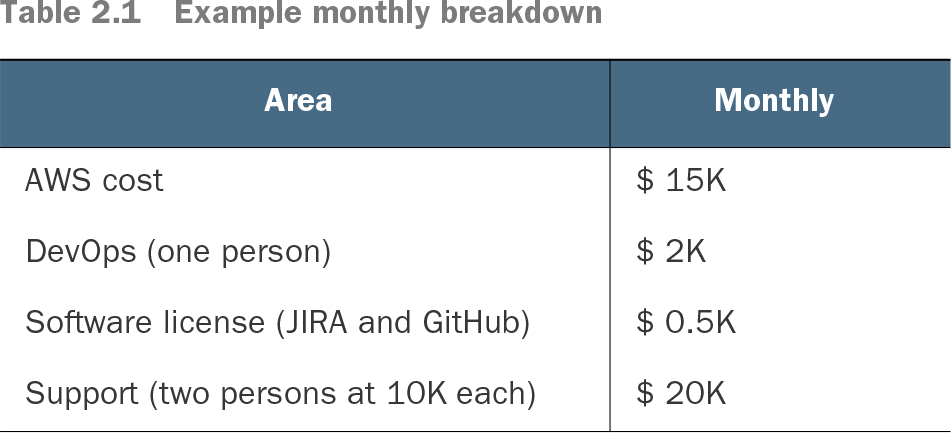
Table 2.1 Example monthly breakdown (view table figure)
Use the monthly expenditure breakdown to identify the cost base against which an initiative’s savings or returns can be evaluated. section 2.2.1