Summarization
Summarization is the production of a shorter representation of source information that preserves its important content or meaning.

AI for Everyday IT
Document summarization is the process of condensing a document while preserving its essential information and meaning.
- How it is used
- Uses AI to condense documents and workplace conversations into accessible overviews and action items.
- How deep it goes
- Provides adaptable prompts and meeting-recap steps, with guidance on follow-up questions and word-count limitations.
- Examples
- Uses the Paris Agreement, a technical article, email conversations, and meeting recaps as examples or exercises.
- What you can do after
- Apply it via ChatGPT, Gemini, or Microsoft Teams to request summaries tailored to an audience or workplace task.
Starting Data Analytics with Generative AI and Python
Text summarization is the generation of a shorter text that preserves the important information and key ideas from a source text.
- How it is used
- Uses summarization to turn reports and customer feedback into concise information for business decisions.
- How deep it goes
- Explains extractive and abstractive approaches and demonstrates frequency-based preprocessing and a generative AI prompt.
- Examples
- Compares frequency-based keywords and ChatGPT summaries for customer reviews, including a Portuguese complaint about an undelivered product.
- What you can do after
- Apply summarization using ChatGPT or a Python frequency-based workflow, then inspect results against source reviews.
Read how Starting Data Analytics with Generative AI and Python explains summarization →

Build AI-Enhanced Web Apps
Text summarization is the generation of a shorter representation that preserves the important information in source text.
- How it is used
- Builds a web feature that turns uploaded documents or pasted text into concise summaries.
- How deep it goes
- Walks through loading, chunking, MapReduce summarization, UI integration, and parsing limitations; also outlines iterative refinement.
- Examples
- Uses PDF and DOCX uploads, pasted text, a MapReduce chain, and a summary of a tidy data paper.
- What you can do after
- Apply it via LangChain.js and the Vercel AI SDK to build a document summarization web app.
Read how Build AI-Enhanced Web Apps explains summarization →
Data Analysis with LLMs
Text summarization is the production of a shorter text that preserves the most important information from a source text.
- How it is used
- Uses review summaries to make customer feedback easier to analyze for recurring product strengths and weaknesses.
- How deep it goes
- Introduces summarization as an instruction-driven text task; does not explain a summarization algorithm or model internals.
- Examples
- Uses a laptop review praising its screen and speed, criticizing its weight, and approving its price.
- What you can do after
- Apply it via the ChatGPT web interface by supplying text and a task description that specifies the desired summary.
Effective Conversational AI
A summary is a shortened representation of content that preserves its key highlights and details.
- How it is used
- Condenses chatbot conversations for human-agent handoffs and restates customer problems in personalized greetings.
- How deep it goes
- Works through transcript prompts, prose summaries, structured extraction, and testing; does not develop model internals.
- Examples
- Uses a claim-status conversation ending in “representative,” plus prompts that produce prose summaries and JSON claim identifiers.
- What you can do after
- Apply it via LLM prompts to prepare handoff summaries and extract specified details, then check outputs against transcripts.
Read how Effective Conversational AI explains summarization →

AI Agents and Applications
Summarization is the generation of a shorter representation that preserves the important information in source content.
- How it is used
- Condenses documents and web pages for previews, reports, and automated research synthesis.
- How deep it goes
- Works through direct prompts, MapReduce and refine selection, and LangChain implementations with intermediate steps.
- Examples
- Uses a 1980s home-computer passage and a web research workflow that retains page URLs and search queries.
- What you can do after
- Apply it via LangChain to summarize documents and assemble a research report.
Read how AI Agents and Applications explains summarization →

Knowledge Graphs and LLMs in Action
Summarization is the process of condensing information into a shorter representation that preserves its most relevant factual content.
- How it is used
- Presents knowledge-graph query results as concise, context-rich explanations alongside visual graph exploration.
- How deep it goes
- Explains the summarization position and prompt inputs, including questions, Cypher queries, records, selections, and node properties.
- Examples
- Uses crime-investigation results, node properties, vehicle details, and a partial license plate as concrete summary content.
- What you can do after
- Apply it via a result-aware prompt to produce concise summaries that emphasize important facts hidden within graph data.
Read how Knowledge Graphs and LLMs in Action explains summarization →

Microsoft Azure in Action
Summarization is the generation of a shorter representation that preserves the main information in a source text.
- How it is used
- Uses summarization for book discovery and for fitting longer source text into a model’s context window.
- How deep it goes
- Explains the purpose through a suitcase analogy but does not work through a summary prompt or assess summary quality.
- Examples
- Uses generated book summaries for customer discovery and an oversized book or conversation as a context-limit example.
- What you can do after
- Evaluate/understand when a shorter text could aid book discovery or reduce input size for a model.

Lead Developer Career Guide
The technique of restating the main points of a message in condensed form.
- How it is used
- Guides readers through technical documents and confirms understanding during project-team conversations.
- How deep it goes
- Defines summarizing within active listening and gives one workplace example, without a detailed procedure.
- Examples
- Uses a developer-environment guide overview and a project manager’s new-feature request repeated back.
- What you can do after
- Practice/perform summarizing by restating a speaker’s message to check understanding and surface misunderstandings.
Read how Lead Developer Career Guide explains summarization →
Building Specialized AI Systems
Summarization is the generation of a shorter text that preserves the essential information of a source.
- How it is used
- Automates high-stakes financial report summarization while preserving analyst priorities and reducing manual review time.
- How deep it goes
- Explains domain adaptation through dataset formatting, LoRA, sequence limits, and training configuration, but does not detail evaluation.
- Examples
- Uses investment research reports containing financial metrics, valuation data, narrative reasoning, and verified summaries.
- What you can do after
- Build a domain-adapted summarization model by formatting report-summary pairs and fine-tuning a pretrained model with LoRA.
Read how Building Specialized AI Systems explains summarization →
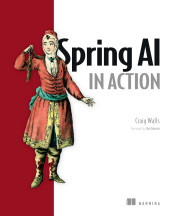
Spring AI in Action
Summarization is the technique of condensing lengthy text into a shorter representation that preserves its essential meaning.
- How it is used
- Applies generative AI to turn lengthy documents into concise, usable summaries such as board-game quick-start instructions.
- How deep it goes
- Demonstrates prompt design, ChatClient integration, typed results, document extraction, dependency setup, and an HTTP endpoint.
- Examples
- Uses board-game rules, a Burger Battle PDF upload, quick-start instructions, and a JSON response containing the summary and game title.
- What you can do after
- Apply it via Spring AI ChatClient to build an endpoint that extracts uploaded documents and returns concise typed summaries.

LLM Evaluation and Alignment, The Foundational Ideas
Summarization is the task of condensing a source document into a shorter text that preserves its essential information.
- How it is used
- Evaluates summaries by measuring coverage of essential information rather than exact phrasing.
- How deep it goes
- Explains recall-oriented ROUGE and F-measure, while noting that lexical metrics miss meaning, synonyms, and coherence.
- Examples
- Uses three differently worded summaries of a company earnings report to illustrate shared information coverage.
- What you can do after
- Evaluate summaries with ROUGE by prioritizing information coverage and interpreting lexical-overlap scores cautiously.
Read how LLM Evaluation and Alignment, The Foundational Ideas explains summarization →
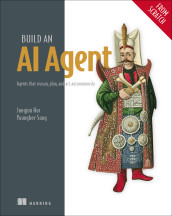
Build an AI Agent (From Scratch)
Summarization is a context-reduction technique that replaces information with a shorter representation of its meaning, typically generated by a language model.
- How it is used
- Reduces growing agent context within a run or across accumulated session history by condensing older conversation.
- How deep it goes
- Details target selection, preservation boundaries, structured prompts, state tracking, and fallback ordering.
- Examples
- Uses execution histories organized around key findings, tools called, current status, and remaining work.
- What you can do after
- Operate it by preserving the original question and recent messages, summarizing intermediate work, and tracking the last summarized position.
Read how Build an AI Agent (From Scratch) explains summarization →
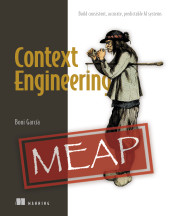
Context Engineering
The production of a shorter representation of information while retaining selected content.
- How it is used
- Reduces agent interaction history, tool outputs, and phase results to fit a finite context window.
- How deep it goes
- Describes summary formats, incremental updates, compression boundaries, and drift mitigation without specifying an implementation.
- Examples
- Uses coding-agent compaction to illustrate summarizing modified files, command outcomes, and architectural decisions.
- What you can do after
- Evaluate how to preserve task-critical state and limit drift when compressing agent context.

Building LLM Applications with DSPy
Summarization is the task of producing a shorter representation that preserves the important information in a source text.
- How it is used
- Uses summarization as a language-model task and a case for developing more complex evaluation metrics.
- How deep it goes
- Explains summary-quality concerns and a basic DSPy signature, while noting that evaluation requires more than simple correctness checks.
- Examples
- Uses the opening 20 stanzas of The Rime of the Ancient Mariner and a DSPy poem-to-summary prediction.
- What you can do after
- Apply summarization through DSPy's Predict interface by passing a poem and receiving a summarization field.
Read how Building LLM Applications with DSPy explains summarization →
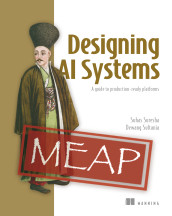
Designing AI Systems
Summarization is the generation of a shorter representation that preserves the salient information from a longer text or interaction.
- How it is used
- Compresses older conversation history to preserve salient information in the context supplied to a model.
- How deep it goes
- Explains prompt design, summary labeling, caching, and model choice, but does not specify when to trigger summarization.
- Examples
- Uses a healthcare conversation retaining an allergy, symptom, and appointment preference as its example.
- What you can do after
- Apply summarization to retain selected facts while reducing conversation-history tokens.
Building Reliable AI Systems
The process of condensing information into a shorter representation that preserves important content.
- How it is used
- Compresses long-running agent conversations into running memory while retaining key context.
- How deep it goes
- Shows dynamic summary updates and a basic LLM-backed function, but not production safeguards.
- Examples
- Uses a chatbot conversation and a Python example summarizing hiking-related messages.
- What you can do after
- Apply via LangChain to summarize conversation messages and update an existing summary.
Read how Building Reliable AI Systems explains summarization →
Also covered in
- Collaborative Software Design: How to facilitate domain modeling decisions
- Writing for Developers: Blogs that get read
- LLMs in Production
- Natural Language Processing in Action, Second Edition
- Investing for Programmers
- Learn Generative AI with PyTorch
- Hugging Face in Action
- Introduction to Generative AI, Second Edition
- Retrieval Augmented Generation, The Foundational IdeasIn early access (MEAP)
- ASP.NET Core in Action, 3e
- Human-in-the-Loop Machine Learning: Active learning and annotation for human-centered AI
- AI Agents in Action
What to know first
- language modelA language model is a computational model that represents patterns in linguistic sequences to assign probabilities, predict, generate, or evaluate language.
- promptA prompt is text or other input supplied to an AI model to provide instructions, context, or other information that guides its response or generated output.
- context windowA context window is a bounded span of sequence elements or contextual information that a model or processing operation can consider together.
- retrieval-augmented generationRetrieval-augmented generation is a technique that retrieves relevant information from external sources and supplies it as context to a generative model when producing an output.
Related concepts
- language modelused by · A language model is a computational model that represents patterns in linguistic sequences to assign probabilities, predict, generate, or evaluate language.
- extractive summarizationincludes · Extractive summarization produces a shorter representation of source content by retaining selected original words, phrases, sentences, or passages and omitting other material.
- abstractive summarizationincludes · Abstractive summarization generates a concise account of source information using newly composed wording rather than only selecting text from the source.
- ROUGEmeasured by · ROUGE is a family of automatic text-generation evaluation metrics that compare generated text with reference text using lexical overlap, often emphasizing recall.
- promptuses · A prompt is text or other input supplied to an AI model to provide instructions, context, or other information that guides its response or generated output.
- ChatGPTused by · ChatGPT is OpenAI’s conversational AI service, which lets users interact with generative AI models and related tools through natural-language prompts.
Questions about summarization
What is summarization?
Summarization is the production of a shorter representation of source information that preserves its important content or meaning.
Which Manning books explain summarization?
AI for Everyday IT, Starting Data Analytics with Generative AI and Python, Build AI-Enhanced Web Apps, Data Analysis with LLMs, Effective Conversational AI, AI Agents and Applications, Knowledge Graphs and LLMs in Action, Microsoft Azure in Action and 9 more.
What should I know before learning summarization?
Manning books that teach summarization usually introduce language model, prompt, context window and retrieval-augmented generation first.
What kinds of summarization are there?
Kinds of summarization include extractive summarization and abstractive summarization.
What is summarization also called?
Summarization is also called summarizing or summarize.
These guides are generated from the text of Manning books by Manning's knowledge graph and link to the sections they draw on. The full books are available on liveBook and at manning.com.