Throughput measures how many model executions or service requests a system completes within a defined period. It differs from latency, which measures the time for one result. section 8.2.7 section 9.3
Evaluate throughput as a production requirement by checking:
- Test with hardware, workloads, and serving conditions that mirror production; isolated measurements can be misleading. section 8.2.7
- Account for cold starts, parallel execution, downstream serving bottlenecks, and hardware-specific behavior rather than assuming linear scaling. section 8.2.7
- Compare measured throughput with end-to-end performance targets during production-system review. section 9.3
Parallel execution
A model that executes one episode per second might achieve throughput near nine episodes per second when ten models run in parallel, even though individual latency remains unchanged. section 8.2.7
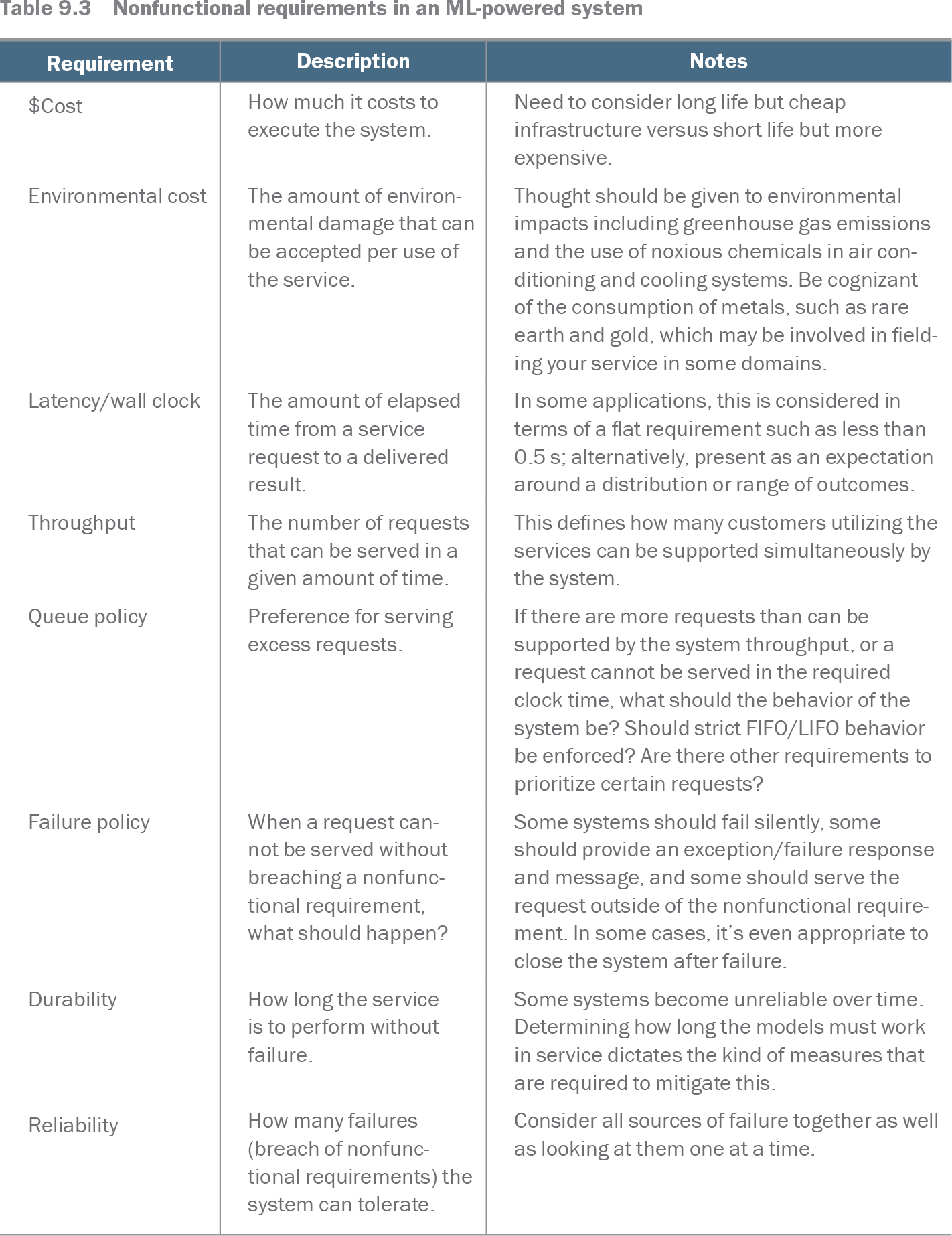
Table 9.3 Nonfunctional requirements in an ML-powered system (view table figure)
Use the nonfunctional-requirements table to place throughput alongside latency, cost, and environmental impact when reviewing an ML-powered system. section 9.3