Unstructured data does not fit easily into rows and columns. It includes text, images, audio, and video. A transaction table, by contrast, can assign each customer a row and each recorded attribute a column. This distinction helps determine how data must be prepared and analyzed. section 1.2.2
Common sources include:
- Text from reviews, surveys, chats, posts, and transcribed customer calls. section 7.2
- Images, audio, and video, which also resist a simple row-and-column representation. section 1.2.2
Before mathematical or statistical analysis, the data needs a numerical representation. A color image, for example, has pixels with red, green, and blue values. Text needs cleaning and can be represented as vectors; comparing representations and their modeling results is worthwhile because text preparation is difficult. section 1.2.2 section 7.18
Using customer feedback
A product review may pair a star rating with free-text feedback. The written review can help a provider understand customers and improve its offering, but its words require preparation before modeling. Recorded customer calls can likewise become text through speech-to-text conversion. section 7.2 section 7.18
Unstructured datasets can require more advanced analysis than structured tables. Deep learning is often used for them when classical machine-learning algorithms are less effective; applications include identifying medical problems in images and recognizing road signals for autonomous driving. The choice still depends on the data and the business problem. section 1.7 section 8.1.1
Figure 1.4 An example of how unstructured data can be represented as a matrix to analyze. The matrix on the right is only an illustration and not the actual numbers.
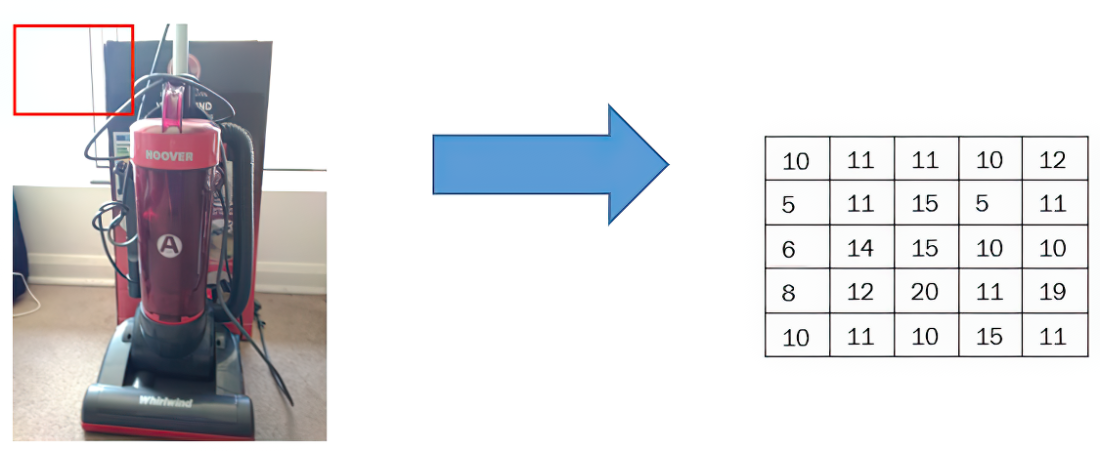
See the illustration of unstructured data represented as a matrix for analysis; its displayed numbers are illustrative, not actual values. section 1.2.2










