A confidence interval estimates the range of results that could arise if the same data-generating process were sampled repeatedly. It helps express how much a causal estimate, such as the average treatment effect (ATE), may vary because of sampling variability. section 8.2
Why an interval matters
Suppose one dataset produces a positive ATE, but a new sample produces a negative ATE. The conflicting estimates may reflect sampling variability rather than a changed causal process. A confidence interval summarizes the range of results that repeated samples might produce. section 8.2
Two broad routes can produce confidence intervals:
- Use resampling methods that rely on simulations and computational power. section 8.2
- Use an analytical formula derived for the specific problem when such a formula is available. section 8.2
- Apply implemented procedures through the DoubleML library in R or Python when working with advanced causal estimates. section 8.0
Figure 8.7 If we repeat the process of obtaining and analyzing data, we get different results. We need confidence intervals to assess how much these different results may change.
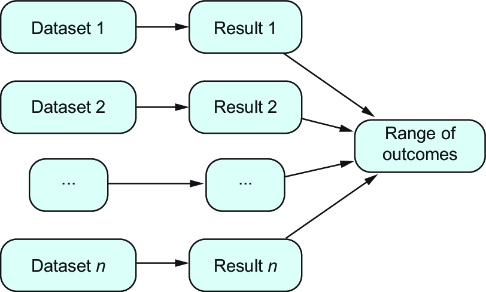
Shows why repeated samples produce different estimates and why an interval is useful for assessing that variation. section 8.2









