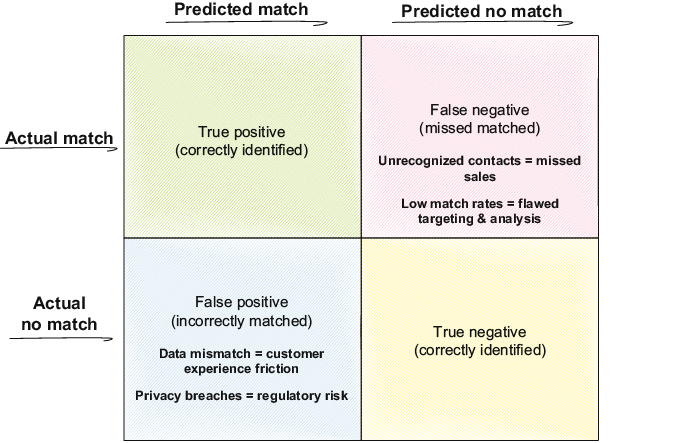
A confusion matrix organizes classification outcomes into four cells, creating shared language for assessing identity-resolution matches and their risks. section 6.1
For identity resolution, each quadrant represents a different matching result:
- True positive: correctly links two records to the same individual—the desired outcome. section 6.1
- False negative: misses a genuine match, causing missed opportunities and inaccurate analysis. section 6.1
- False positive: links different people incorrectly, risking poor customer experiences and privacy violations. section 6.1
- True negative: correctly identifies two records as belonging to different individuals. section 6.1
Retail identity resolution
If activity from a shared household IP address is wrongly attributed to one customer, false positives can produce irrelevant recommendations; false negatives can hide a valuable customer or life-event opportunity. section 6.1
Figure 6.2 Identify resolution confusion matrix
View the two-by-two identity-resolution matrix and its quadrant labels. section 6.1













