A context window is an LLM’s working memory for one prompt: the maximum number of tokens it can process at once. More text is not always better; long calls can reduce performance before reaching the hard limit. section 6.1 section 1.6
This limit matters when designing agents. Giving one agent too many tools, tasks, and descriptions clutters its available context, makes tool selection less reliable, and complicates debugging. Splitting work among specialized agents keeps each context more manageable. section 6.1
GPT-3 prompt capacity
GPT-3 allowed a maximum of 2,048 tokens in one prompt—roughly three pages. Modern models can accept much larger contexts, sometimes including entire books, but practical performance can still decline as calls grow longer. section 1.6 section 6.1
Figure 6.1 It’s difficult to be a solo agent with too much on its plate!
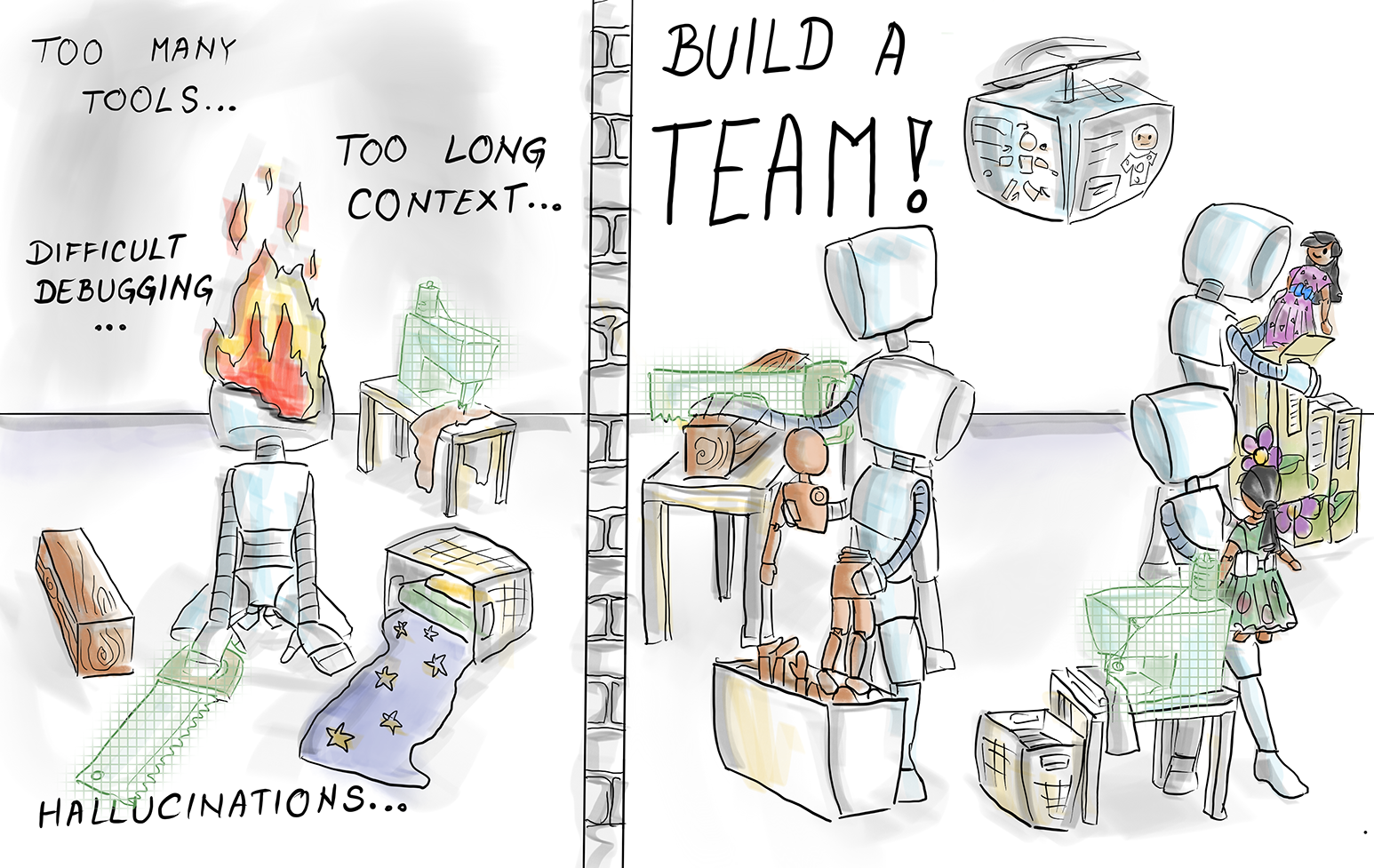
Use the overloaded-solo-agent illustration to visualize how excessive tools and tasks crowd an agent’s working context. section 6.1





















