Data cleaning prepares demand and demand-driver data for forecasting by finding inaccurate, inconsistent, missing, or unsuitable information and correcting its underlying causes. In demand planning, bad data can defeat a good model, so cleaning is part of building a dependable forecasting process rather than a final cosmetic step. section 14.4.1 section 14.4.2
Use data cleaning as an operational investigation:
- Define the forecasting objective and aggregation first, then gather demand data rather than relying on sales data alone. section 14.4.1
- Assess whether collecting and cleaning additional demand drivers—such as prices, promotions, weather, or other external information—is worth its expected forecasting benefit. section 14.2.2 section 14.4.1
- When errors appear, inspect the root cause instead of manually smoothing outliers; inaccurate data requires correction, while missing drivers require more relevant data. section 14.4.2
- Use error graphs or dashboards across training and test data to create a feedback loop for finding overlooked information and improving the dataset. section 14.4.2
A forecast error with a hidden cause
A historical price increase reduces demand, but the model has no price data. The error is not fixed by manually smoothing the affected observations: collect and clean price information, then ensure the model can use that demand driver. Similar checks can reveal promotions, holidays, or shortages that explain unusually large errors. section 14.4.2
Figure 14.12 4-step model creation loop
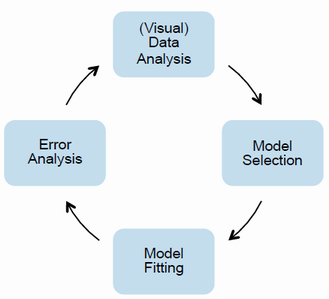
Use the model-creation loop to connect error inspection with root-cause analysis, data cleaning, and subsequent model improvement. section 14.4.2













