Data cleaning detects and corrects inaccurate, inconsistent, incomplete, or improperly formatted records before they support identity resolution. Reliable inputs improve matching, while poor hygiene produces “garbage in, garbage out” outcomes. section 6.1
Practical data-cleaning priorities include:
- Review key identity fields and use deterministic cascade matching for company records, including company name, headquarters, key employees, and third-party identifiers. section 6.1.2
- Control data quality at entry, especially when sales teams enter company information into CRM systems. section 6.1.2
- Have sales operations review accounts and merge duplicate company records so related knowledge remains together. section 6.1.2
- Balance further cleaning against diminishing returns and the goals of the business or campaign. section 6.1
Why accuracy matters
Merging two records for the same person is a true positive; merging different people is a false positive that can expose personal information, damage customer experience, and create regulatory risk. At a company, duplicate CRM accounts can fragment activity and undermine lead scoring. section 6.1 section 6.1.2
Figure 6.2 Identify resolution confusion matrix
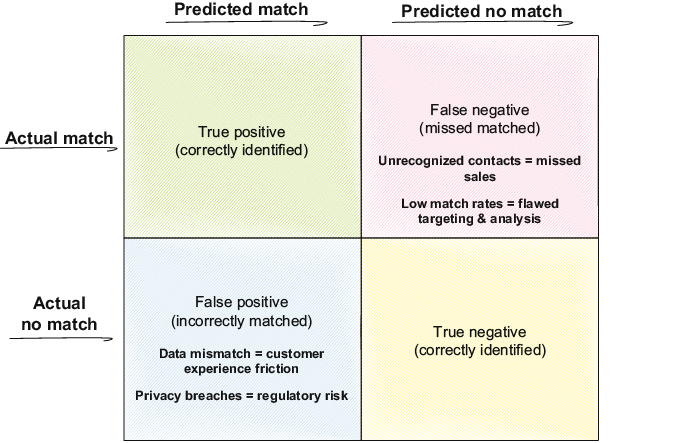
Use the confusion matrix to distinguish correct matches, missed matches, and incorrect matches when evaluating cleaning and identity-resolution quality. section 6.1













