Dimensionality reduction represents data with fewer features while retaining a strong correlation with the problem being analyzed. Node embedding models apply this idea to generate compact vectors for graph nodes automatically. section 9.0
BMI as a compact feature
Obesity could be described using height, weight, body-fat percentage, muscle content, and waist circumference. BMI compresses this information into one feature based on height and weight, reducing measurement needs while remaining an imperfect proxy: muscular rugby players may be classified as obese. section 9.0
In graph analysis, dimensionality reduction replaces handcrafted node features with automatically generated representation vectors. These embeddings can support downstream machine-learning tasks, while methods such as node2vec explore different structural and neighborhood-based representations. section 9.0
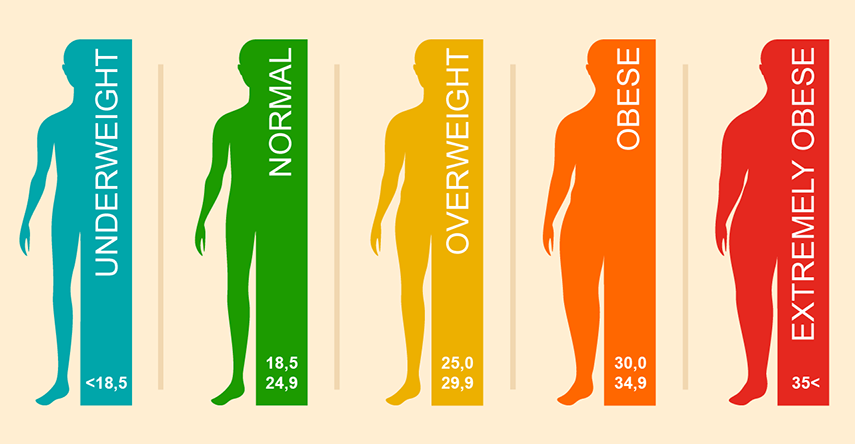
Use the BMI chart to connect a familiar single-feature estimate with the idea of compact data representation. section 9.0










