liveBook · Manning

Feedback

As explained in BDD in Action, Second Edition

Feedback is information about observed results or understanding that guides subsequent decisions, actions, or improvements.

Feedback turns observed results, stakeholder responses, or test outcomes into the next decision. In software delivery, it helps teams revise their understanding before assumptions become expensive to change. section 2.3.3 section 2.5.1

Effective feedback keeps learning connected to action:

  • Show valuable features to users and stakeholders early, then change direction when their responses reveal different needs. section 2.3.3
  • Use conversations and collaboration to build shared understanding of requirements and business value rather than postponing stakeholder input. section 2.5.1
  • Treat a failing automated acceptance test as a warning about project health, but preserve confidence by designing tests that are stable and maintainable. section 9.1

From password rules to password strength

A team initially discusses detailed password rules such as rejecting alphabetical or keyboard sequences. Examples and a strength meter reveal that the real goal is an adequately strong password, allowing the team to keep implementation options open while learning more. section 6.2
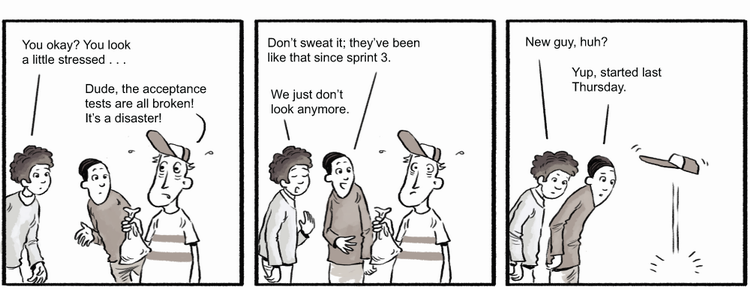
Figure 9.1 Acceptance tests that fail too often can lead to complacency.

Use the figure to examine how frequently failing acceptance tests can weaken confidence in test feedback and encourage complacency. section 9.1


How BDD in Action, Second Edition covers it

How deep it goes
Explains feedback through early demonstrations, conversations, examples, and reliable acceptance tests, without specifying one universal feedback method.
Examples
Uses early feature demonstrations, stakeholder conversations, password-strength examples, and automated acceptance-test failures.
What it assumes
Assumes willingness to engage stakeholders, collaborate on requirements, and treat tests as maintained software rather than disposable checks.
What you can do after
Apply feedback to revise requirements, prioritize valuable features, refine acceptance criteria, and investigate unreliable automated tests.
How it connects
Connects feedback with behavior-driven development, requirements, stakeholder collaboration, acceptance testing, and business value.

Also explained in

Compare how 18 books explain feedback →

Related concepts

This explainer was generated by Manning's knowledge graph from the text of BDD in Action, Second Edition. The section links point to the parts of the book it draws on.















